
- Response Speed Starts at the Connection Point
- Coupling Design vs. Leak Risk During Live Operation
- Fire Hose Coupling Types and Their Operational Trade-Offs
- Leak Prevention Is a System Issue, Not Just a Coupling Issue
- Pressure Cycles, Vibration, and Coupling Fatigue Over Time
- Selecting Coupling Types Based on Deployment Environment
- How Anaconda Approaches Hose and Coupling Compatibility
- What Is Commonly Overlooked When Evaluating Fire Hose Couplings
- Faster Connections and Reliable Sealing Drive Better Fire Response
In fire response operations, delays rarely come from the hose itself. They come from connections that take too long to secure or fail to hold pressure once the system is live. Fire hose couplings play a direct role in how quickly a hose line can be deployed and how reliably it performs under pressure. A slow connection or a minor leak can reduce flow, waste critical time, and compromise safety.
This is why coupling selection is not a secondary decision. From quick-connect hose fittings designed for quick deployment to threaded systems built for long-term reliability, each coupling type affects response speed and fire hose leak prevention in different ways. At Anaconda Pipe & Hose, hoses and couplings are considered a single operating system, engineered to perform consistently in high-pressure firefighting and industrial environments.
Response Speed Starts at the Connection Point
In active fire scenarios, response speed is measured in setup time, not just water delivery. The moment a hose is pulled from storage, the coupling becomes the first operational checkpoint. If alignment is slow, locking is unclear, or excessive force is required, valuable seconds are lost before flow even begins.
Fire hose couplings directly influence how fast a hose line can be charged. Traditional threaded couplings often require precise alignment and multiple turns, which can slow deployment under pressure or low visibility. In contrast, quick-connect hose fittings are designed to reduce handling steps, allowing crews to connect lines faster with fewer errors.
Response speed is also affected by consistency. When couplings engage cleanly every time, crews move with confidence instead of stopping to recheck seals or retighten connections. Faster connections mean quicker pressurisation, stable flow, and fewer interruptions once the system is live. This is where coupling design moves from convenience to operational advantage.
Coupling Design vs. Leak Risk During Live Operation
Once water is flowing, the role of the coupling shifts from speed to seal integrity. Even small leaks at the coupling point can reduce pressure, disrupt flow patterns, and create safety risks around charged hose lines. This makes fire hoses leak prevention a critical performance factor, not a maintenance issue.
Leak risk is often linked to the coupling design and its handling of real-world conditions. Threaded couplings can loosen under vibration or pressure cycling if not fully seated. Misalignment or debris in the threads can also prevent a proper seal. Quick-connect hose fittings, when correctly matched to pressure ratings and hose construction, reduce these risks by providing uniform locking and consistent gasket compression.
Effective leak prevention depends on how the coupling interacts with the hose body. Reinforcement layers, end fittings, and coupling retention methods must work together to maintain a tight seal under sustained pressure. This system-level approach is essential for maintaining flow efficiency and operational reliability throughout the response.
Fire Hose Coupling Types and Their Operational Trade-Offs
Not all coupling types perform the same way in the field. Each design offers advantages, but also introduces limitations that affect response speed and leak control. Understanding these trade-offs helps teams select fire hose couplings that match real operating conditions, not just specifications.
Threaded couplings are widely used for their strength and compatibility with fixed systems. They provide a secure connection when correctly installed, but deployment can be slower due to alignment requirements. Over time, thread wear and repeated tightening can increase the risk of leaks if maintenance is inconsistent.
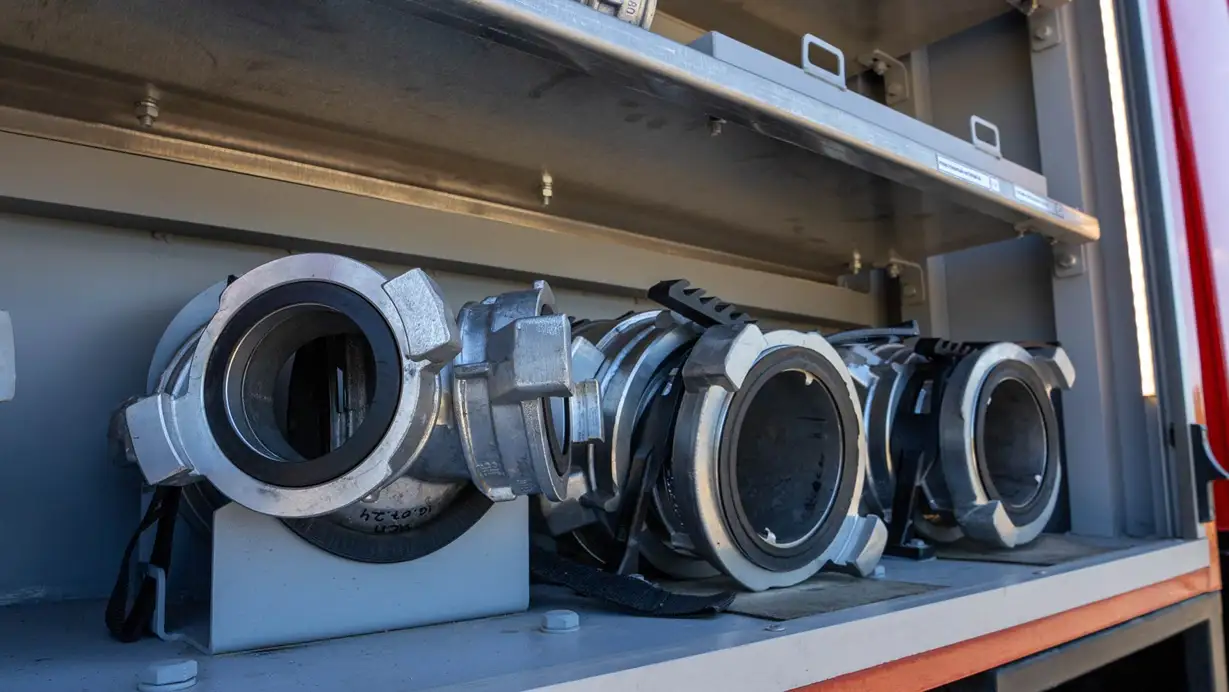
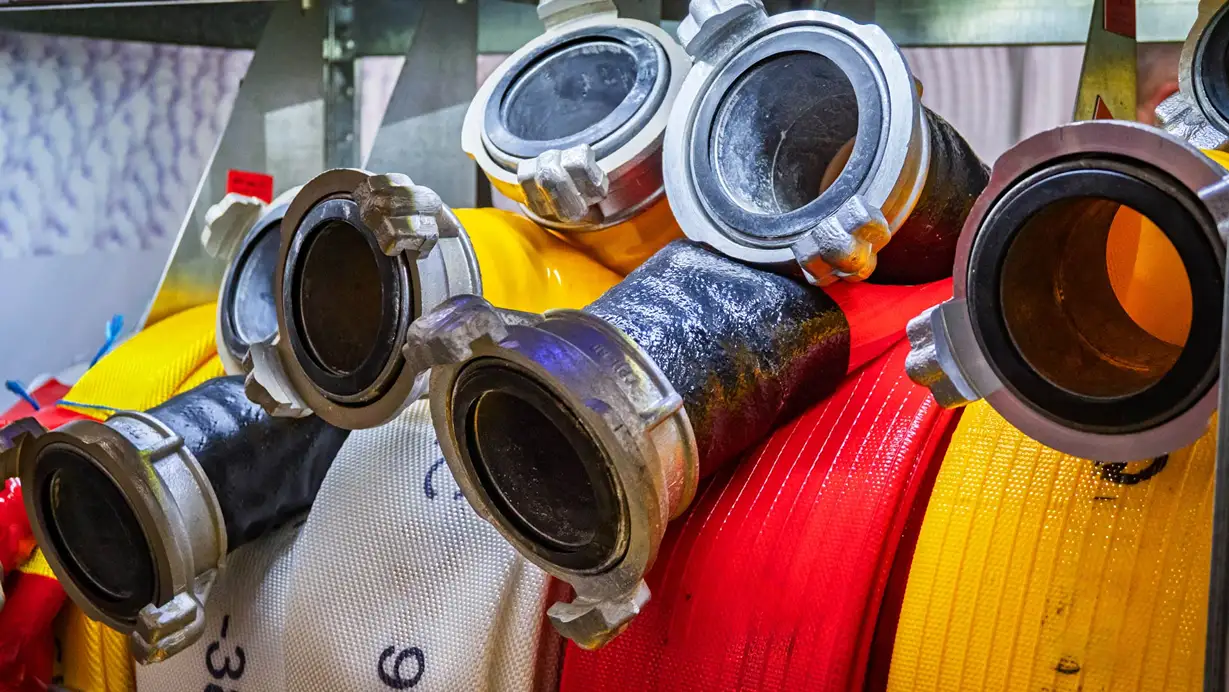
Storz-type couplings are designed for fast engagement with a quarter-turn locking action. This reduces connection time and improves consistency during emergency response. Their uniform seal design supports reliable fire hoses leak prevention, especially in high-flow applications where pressure stability is important.
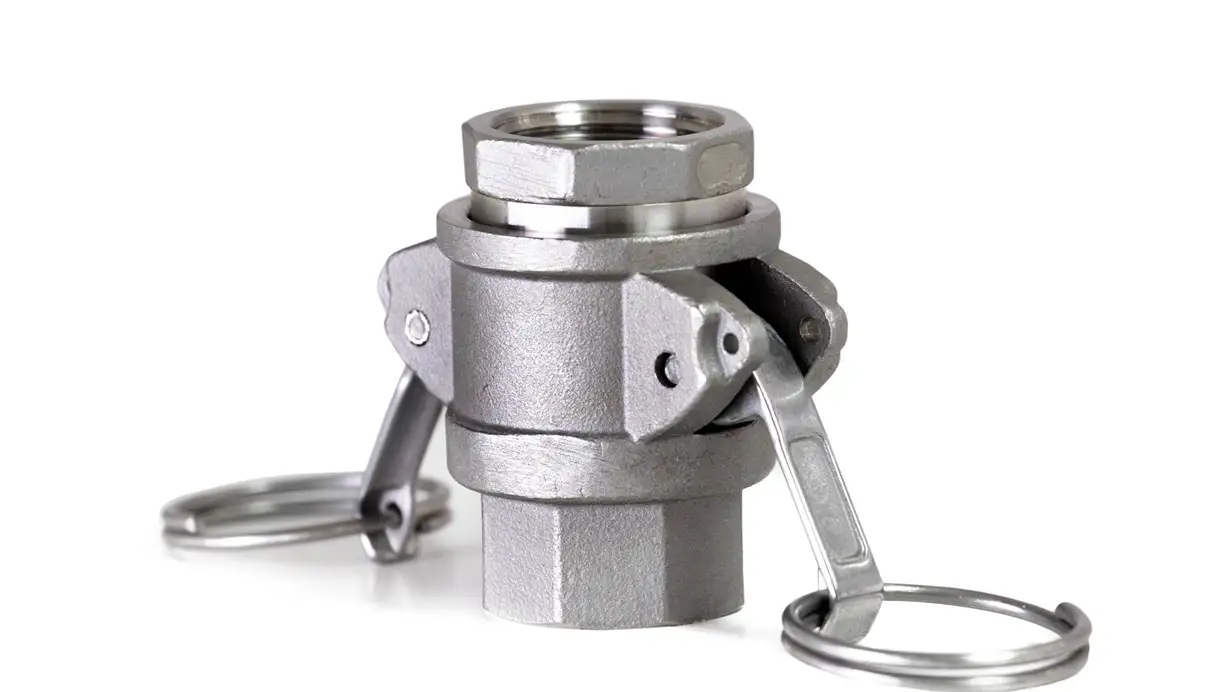
Quick-connect hose fittings, including camlock-style designs, prioritise speed and ease of use. These fittings are effective in industrial and temporary firefighting setups where rapid assembly and disassembly are common. However, their performance depends on correct pressure ratings and secure locking, making compatibility with the hose construction essential for long-term reliability.
Leak Prevention Is a System Issue, Not Just a Coupling Issue
Leaks at the coupling point are rarely caused by the coupling alone. In most cases, they result from a mismatch among hose construction, coupling design, and operating pressure. Treating fire hose leak prevention as a system requirement leads to more reliable performance in the field.
The interface between the hose and the coupling is critical. Factors such as reinforcement strength, wall thickness, and end retention methods determine how well the hose supports the coupling under pressure. Even a high-quality coupling can leak if the hose body deforms or if the gasket compression is uneven.
This is why coupling selection must account for how the hose will behave during pressurisation, pressure surges, and repeated use. Fire hose couplings perform best when they are engineered to work with the hose as a single assembly, maintaining seal integrity across multiple deployments. A system-based approach reduces pressure loss, limits maintenance issues, and improves overall operational reliability.
Pressure Cycles, Vibration, and Coupling Fatigue Over Time
Fire hoses rarely operate under steady conditions. During active response, pressure builds rapidly, fluctuates with pump output, and drops during shutoff or repositioning. These pressure cycles place continuous stress on fire hose couplings, especially at the seal and locking points.
Repeated pressurisation and depressurisation can lead to coupling fatigue. Threaded connections may gradually loosen, while sealing components can wear or compress unevenly. Quick-connect hose fittings are also affected if locking mechanisms or gaskets are not designed to handle frequent pressure changes.
Vibration from pumps, vehicle movement, or water hammer further increases stress at the coupling interface. Over time, this can compromise fire hose leak prevention, even if the coupling initially performed well. Designing hoses and couplings to withstand these operating conditions helps maintain seal integrity, reduce maintenance interventions, and ensure consistent performance throughout the hose’s service life.
Selecting Coupling Types Based on Deployment Environment
The right coupling choice depends on where and how the hose will be used. Fire response conditions vary widely, and fire hose couplings must be selected to match operational demands rather than relying on a single standard across all applications.
In municipal and emergency firefighting, fast deployment and reliable sealing are critical. Couplings that allow quick alignment and secure locking support faster response times while maintaining fire hose leak prevention under high flow rates. For industrial fire protection systems, durability and compatibility with fixed infrastructure often take priority, making the stability of couplings under sustained pressure a key consideration.
Remote and temporary setups, such as mining sites or construction zones, benefit from quick-connect hose fittings that reduce setup time and simplify hose handling. In these environments, ease of connection and consistent sealing help crews operate efficiently while minimising the risk of leaks caused by repeated assembly and disassembly. Matching coupling type to deployment environment improves performance, safety, and overall system reliability.
How Anaconda Approaches Hose and Coupling Compatibility
Reliable performance depends on how well the hose and coupling work together under pressure. Rather than treating couplings as add-on components, Anaconda Pipe & Hose focuses on compatibility across the full hose assembly. This includes matching hose reinforcement, wall construction, and pressure ratings with coupling designs that can maintain a secure seal during rapid deployment and continuous operation.
This approach reduces common field issues such as coupling slippage, uneven gasket compression, and pressure loss at connection points. By aligning fire hose couplings with the mechanical behaviour of the hose, the system performs more consistently during setup, pressurisation, and extended use.
For users, this means fewer adjustments on site, improved fire hoses leak prevention, and more predictable response performance. When hoses and couplings are engineered as a single system, response speed improves, and operational risk is reduced across demanding firefighting and industrial environments.
What Is Commonly Overlooked When Evaluating Fire Hose Couplings
Coupling selection is often treated as a specification checkbox rather than an operational decision. Many procurement teams focus on hose diameter, length, and pressure rating, while fire hose couplings receive minimal evaluation beyond basic compatibility. This approach can create performance gaps once the hose is in service.
One common oversight is underestimating the impact of minor leaks on overall system efficiency. Even small losses at the coupling can reduce effective flow, increase pump load, and compromise fire hoses leak prevention during sustained operations. Another issue is selecting quick-connect hose fittings without fully considering pressure cycles, vibration, and long-term wear.
Couplings are also frequently assessed in isolation, without considering their interactions with hose reinforcement and end retention methods. Evaluating the hose and coupling as a single system helps avoid premature failures, reduces maintenance demands, and supports consistent response performance over time.
Faster Connections and Reliable Sealing Drive Better Fire Response
In fire response and industrial protection systems, performance is shaped by the smallest connection points. Fire hose couplings affect how quickly a hose line can be deployed and how effectively it maintains pressure once in service. Connection speed and seal integrity are not separate outcomes. They are directly linked through coupling design, compatibility, and long-term durability.
Choosing the right coupling type improves response efficiency while supporting fire hoses leak prevention under real operating conditions. When hoses and quick-connect hose fittings are engineered to work as a single system, crews spend less time managing connections and more time maintaining stable, effective flow.
For firefighting and industrial applications, treating couplings as performance-critical components rather than accessories enables safer operations, reduces downtime, and delivers more reliable performance in demanding environments.

0 Comments