
- The Engineering Behind Lay-Flat Hoses in Agricultural Use
- How Pressure Actually Behaves in Agricultural Pumping Setups
- Where Lay- Flat Hoses Are Used in High-Pressure Agricultural Pumping
- Choosing the Right Lay-Flat Hose for High-Pressure Agricultural Work
- Installation and Handling Practices That Affect Pressure Performance
- Lay- Flat Hoses Compared to Other Agricultural Pumping Options
- Closing Thoughts on Lay-Flat Hoses in High-Pressure Agricultural Use
In agricultural pumping, pressure is rarely consistent. Flow rates change, pumping distances vary, and systems are often set up temporarily and moved as the season progresses. In these conditions, hoses are expected to withstand high pressure without frequent failures, leaks, or downtime.
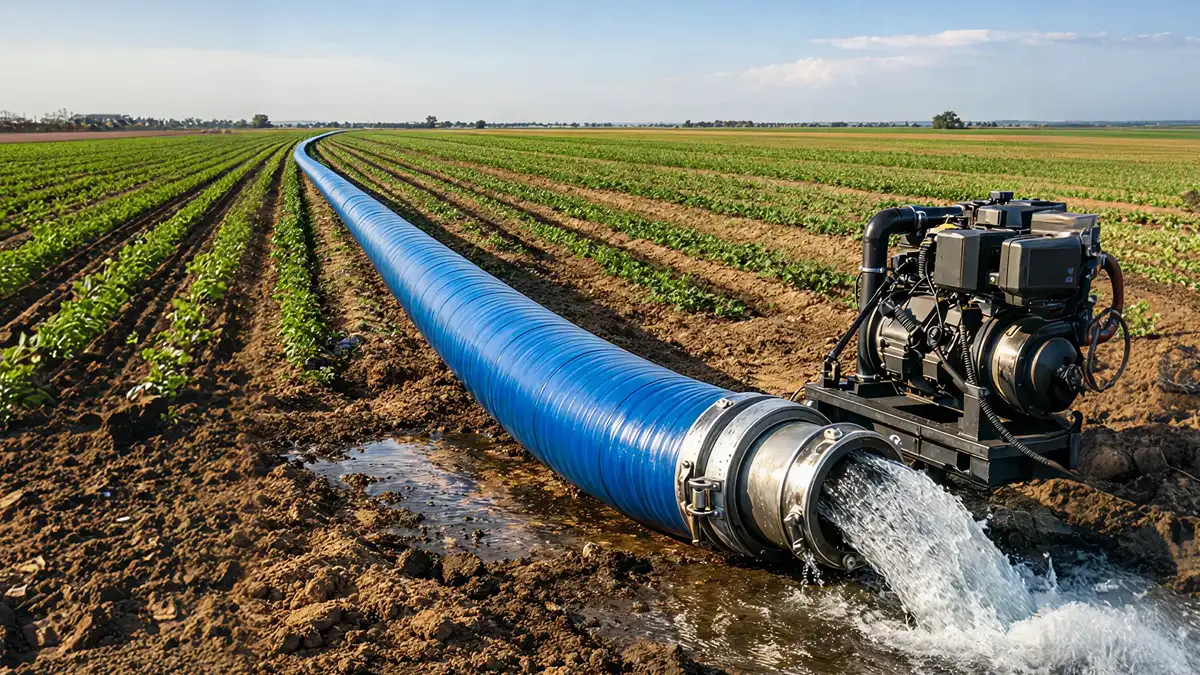
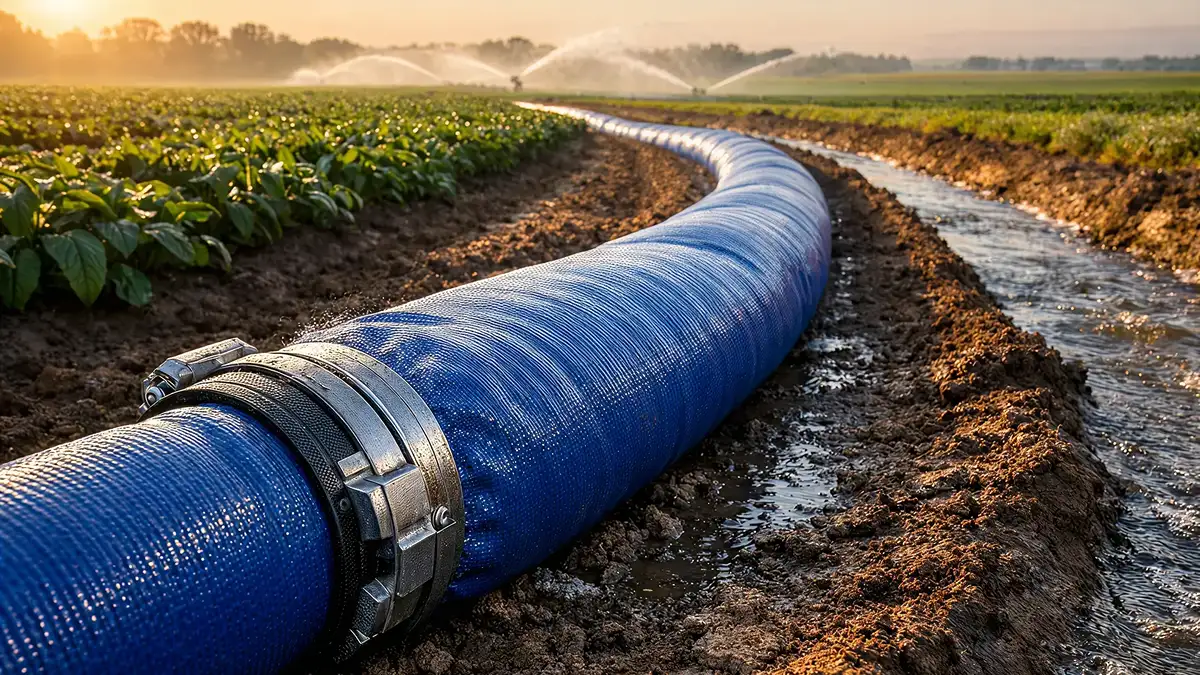
Lay-flat hoses are commonly used in agriculture because they solve practical problems on the ground. They are easier to transport, faster to deploy across fields, and easier to store than rigid pipe systems. When pressurized, lay-flat hoses open evenly and maintain flow, making them suitable for irrigation lines, water transfer, and other agriculture pumping tasks that operate under pressure.
Lay-Flat Hoses supplied by Anaconda Pipe & Hose are designed with these working conditions in mind. Their construction focuses on pressure handling, durability, and repeated field use rather than short-term or light-duty operation. This article examines how lay-flat hoses manage pressure in agricultural pumping systems and where they fit into high-pressure farm applications.
The Engineering Behind Lay-Flat Hoses in Agricultural Use
Lay-flat hoses are not designed to “withstand pressure,” in theory. In agriculture, pressure comes from real conditions: long pump runs, elevation changes, uneven ground, and systems that are switched on and off repeatedly throughout the day. If a hose cannot handle that cycle, it shows quickly through bulging, weak spots, or failures at the couplings.
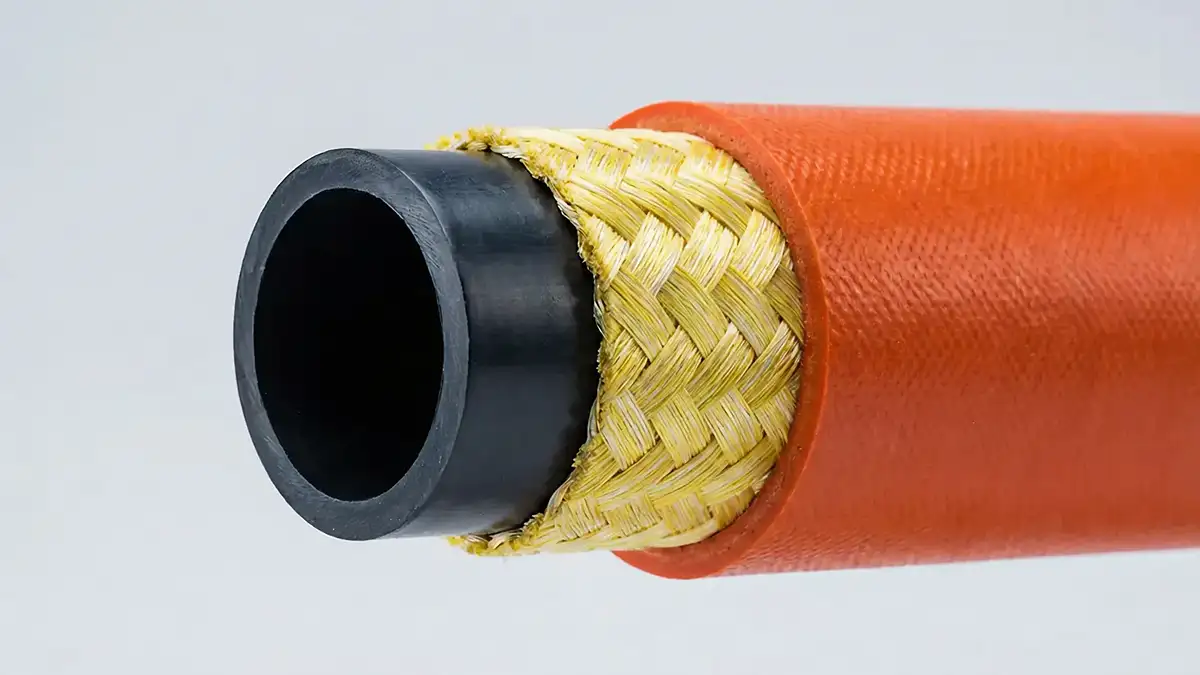
What allows lay-flat hoses to work in these situations is the reinforcement built into the hose wall. When pressure builds inside the hose, the reinforcement carries the load and prevents the hose from stretching in one direction. This keeps the diameter stable and helps maintain flow during agricultural pumping, even when pressure fluctuates.
Material choice matters just as much. Agricultural hoses are dragged across soil, exposed to sunlight, and often come into contact with fertilizers or surface water. A lay-flat hose that performs well under high pressure but degrades quickly in the field does not last long in real use.
Lay-Flat Hoses from Anaconda Pipe & Hose are built for these working conditions. The focus is on pressure stability, abrasion resistance, and repeat handling rather than short-term performance. This construction allows the hose to operate reliably in high-pressure agricultural applications without becoming difficult to manage in the field.
How Pressure Actually Behaves in Agricultural Pumping Setups
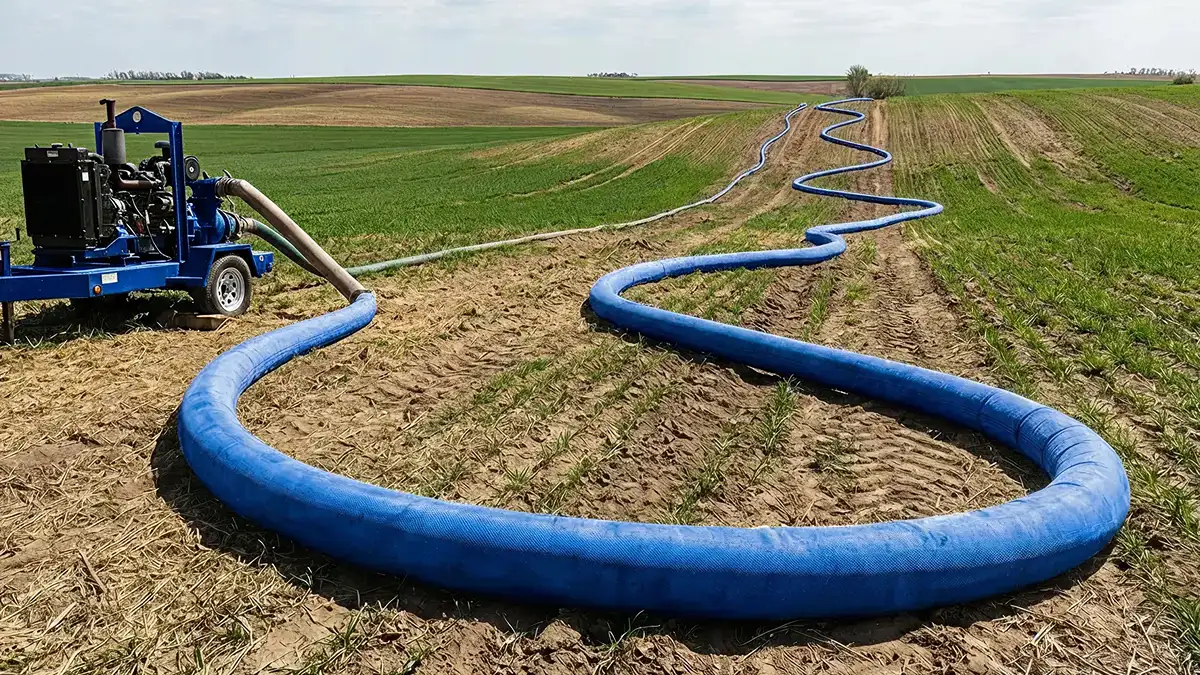
In agricultural pumping, pressure does not behave evenly along the length of the hose. It changes based on distance, pump output, elevation, and how often the system is started and stopped. A setup that works at the pump outlet can behave very differently 200 or 500 meters down the line.
As the pumping distance increases, friction loss builds up inside the hose. To compensate, pumps often run at higher pressure. This is where weaker hoses start to show problems. They may flatten at low flow, balloon at high pressure, or develop stress points near couplings. Hoses that are properly reinforced can absorb these pressure changes while maintaining a stable internal diameter.
Elevation changes add another layer of stress. When water is pushed uphill, pressure rises near the pump and drops toward the discharge end. In downhill sections, pressure can spike suddenly when flow is restricted or when valves are closed. Flat hoses used for high-pressure applications must withstand both steady pressure and short-term surges without damage.
In agricultural pumping, systems are rarely permanent. Hoses are laid out, moved, reconnected, and reused across seasons. Lay-Flat Hoses supplied by Anaconda Pipe & Hose are designed for this type of operation, where pressure variation, frequent handling, and changing layouts are expected. Their construction supports consistent performance across long runs and uneven terrain, which is critical for high-pressure agricultural use.
Where Lay- Flat Hoses Are Used in High-Pressure Agricultural Pumping
On farms, hoses are rarely used in a fixed way. They are part of temporary systems that change as fields, crops, and water sources change. Because of this, their performance in high-pressure applications is judged less by specifications and more by how they behave during daily agriculture pumping work.
In irrigation, hoses are commonly used to convey water from pumps to sprinklers, pivots, or distribution manifolds. These setups often run for long hours, and pressure needs to remain steady to avoid uneven water delivery. A hose that expands unevenly or loses shape under pressure can disrupt flow and reduce irrigation efficiency.
Hoses are also used to transfer water between ponds, canals, or storage tanks. These applications involve long hose runs and continuous pumping, which increases internal pressure and friction over time. Hoses built for agricultural pumping need to maintain their internal structure without developing weak points along the length.
In drainage and field dewatering, pressure conditions can change quickly when pumps cycle on and off. Hoses that are not designed for pressure surges may kink, collapse, or fail near connections. Lay-Flat Hoses from Anaconda Pipe & Hose are used in these situations because they are designed to handle repeated pressurization while remaining easy to deploy and retrieve in the field.
Choosing the Right Lay-Flat Hose for High-Pressure Agricultural Work
Not all lay-flat hoses perform the same way under pressure. In the agricultural industry, hose selection depends on how pressure is generated and how long the hose is expected to operate under load. Choosing based only on diameter or price often leads to early failure in high-pressure applications.
The first factor is working pressure versus pump output. Pumps used in agriculture may operate near their maximum pressure for extended periods, especially when moving water over long distances. Hoses used in these setups must be rated to withstand continuous pressure, not just short-term peaks.
Length and layout also affect pressure behavior. Longer runs increase friction loss, while sharp bends and uneven ground can create localized stress points. A hose that performs well on a short, straight run may behave differently when stretched across a field or routed around obstacles. For agriculture pumping, hoses need reinforcement that allows them to flex without weakening under pressure.
At Anaconda Pipe & Hose, Lay-Flat Hoses are selected and supplied based on application conditions rather than generic use cases. Factors such as operating pressure, flow rate, terrain, and handling frequency are considered to match the hose to real field conditions. This approach helps reduce pressure-related failures and extends service life in demanding agricultural applications.
Installation and Handling Practices That Affect Pressure Performance
In high-pressure agriculture pumping, many hose problems come from how the system is set up rather than from the hose itself. Even a pressure-rated lay-flat hose can fail early if installation and handling do not account for how pressure builds and moves through the line.
Hoses should be laid out with as few sharp bends as possible. Tight turns create localized stress when pressure rises, especially near couplings. When routing across uneven ground, gradual curves help the hose expand evenly once pumping starts. This is particularly important during start-up, when pressure increases quickly.
Connections are another common pressure weak point. Improperly aligned couplings or uneven tightening can concentrate stress at the hose ends. In agriculture, pumping systems that are assembled and disassembled frequently experience repeated load cycles. Hoses used for high-pressure applications require secure, well-matched fittings to prevent leaks and premature wear.
Handling during shutdown also matters. Sudden valve closures can cause pressure spikes that travel back through the hose. Allowing systems to depressurize gradually reduces stress on the hose wall and reinforcement. Lay-Flat Hose supplied by Anaconda Pipe & Hose is designed for repeated pressurization, but proper installation and handling are key to maintaining pressure performance over time.
Lay- Flat Hoses Compared to Other Agricultural Pumping Options
In agriculture pumping, hoses are often chosen when other options create limitations in the field. Rigid piping systems can withstand pressure well, but they require fixed layouts, take longer to install, and require greater effort to relocate. For farms that change irrigation routes or pumping locations seasonally, rigid pipes become inefficient despite their pressure capability.
Conventional rubber or semi-rigid hoses offer flexibility but can struggle at high pressure over long distances. They are heavier to move, harder to store, and more prone to kinking or internal wear when dragged across fields. Under continuous pressure, these hoses may also develop uneven expansion, which affects flow stability.
Hoses offer a balanced solution, combining the necessary pressure-handling for agricultural pumping with the advantages of flexibility and easy deployment. When correctly set up, these hoses expand uniformly under pressure, ensuring a consistent internal diameter. This makes them ideal for long-distance applications, temporary setups, and repeated use across multiple seasons.
Lay-Flat Hoses from Anaconda Pipe & Hose are used in agricultural settings where pressure capability is required without the permanence of rigid infrastructure. Their design allows farmers and operators to manage high-pressure applications while keeping systems adaptable to changing field conditions.
Closing Thoughts on Lay-Flat Hoses in High-Pressure Agricultural Use
High-pressure agricultural pumping places consistent stress on every part of a fluid transfer system. Hoses are expected to perform over long distances, across uneven terrain, and through repeated operating cycles without becoming a weak point. In these conditions, hoses offer a practical balance between pressure handling and field flexibility.
When correctly specified and installed, lay-flat hoses can withstand pressure variations, maintain stable flow, and simplify seasonal setup and removal. Their collapsible design reduces storage space and handling effort, while reinforced construction supports demanding agricultural pumping requirements.
Lay-Flat Hoses from Anaconda Pipe & Hose are designed for these real-world conditions, focusing on durability, pressure stability, and repeated use rather than one-time installations. For agricultural operations that rely on high-pressure applications but need adaptable systems, lay-flat hoses remain a reliable, proven solution.


0 Comments