Shipbuilding and Marine
Shipbuilding and marine operations demand fluid transfer systems that can perform reliably in corrosive saltwater environments, high-movement installations, and heavy-duty material handling applications. Anaconda Pipe and Hose supports these operations with industrial HDPE pipe, slurry hose, and lay flat hose engineered for durability, flexibility, and rapid deployment. HDPE pipe offers corrosion resistance and smooth internal flow for efficient transport of water, slurry, and process fluids, while industrial slurry hose handles abrasive materials in dynamic marine conditions. Lay flat hose provides lightweight, portable fluid transfer for dewatering, maintenance, and temporary marine operations. Together, these systems deliver dependable conveyance solutions for shipyards, dredging vessels, port infrastructure, and offshore maintenance projects.
Operational Advantages for Marine Infrastructure
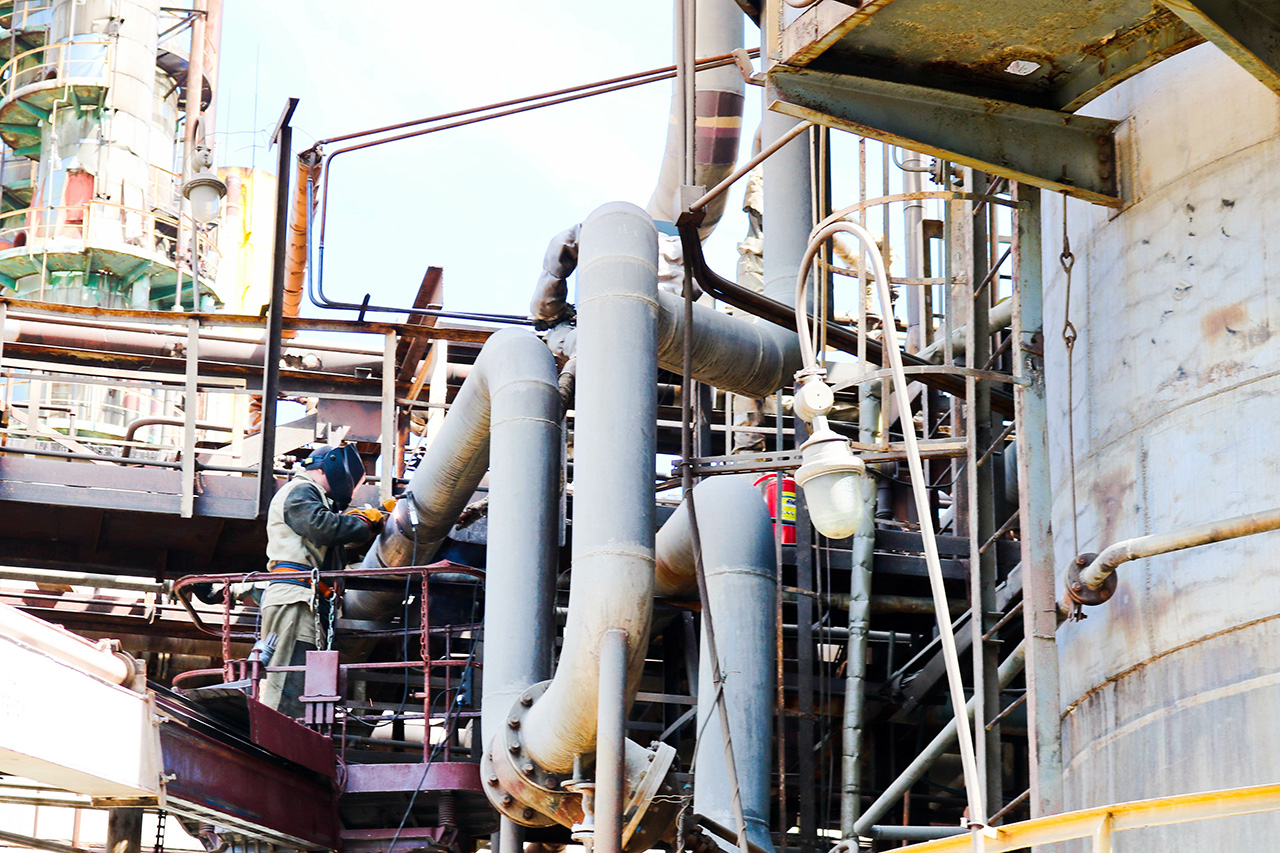
- Corrosion-resistant HDPE pipe construction prevents rust and chemical degradation in saltwater and harsh marine environments.
- Smooth internal pipe walls reduce friction loss, improving flow efficiency when transferring seawater, slurry, ballast water, or dredged sediment.
- Industrial slurry hose is designed to transport abrasive materials such as sand, sludge, and dredged sediment commonly encountered in shipyard maintenance and port dredging.
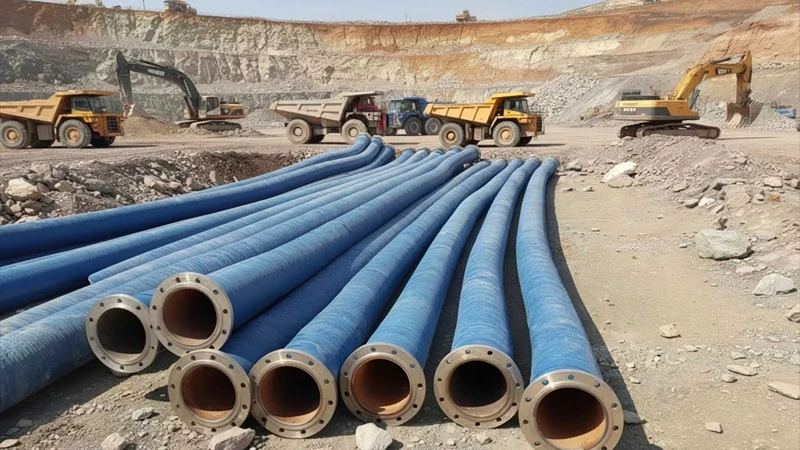
- Heavy-duty hose reinforcement allows the system to withstand demanding marine operations, including pumping from barges, dredgers, and floating pump systems.
- Flexible hose configurations simplify routing around docks, vessels, and tight shipyard infrastructure where rigid piping is difficult to install.
- Lay flat hose provides lightweight, portable fluid-transfer solutions for temporary marine operations, such as ship maintenance, washdown, and dewatering.
- Compact hose storage and rapid deployment reduce installation time during emergency pumping or vessel servicing operations.
- High resistance to UV exposure and environmental wear ensures reliable performance in exposed dockside and offshore conditions.
- ANSI flange connections on HDPE pipe provide secure mechanical joining while allowing efficient system assembly and alignment during marine installations.
- Compatible with dredging pumps, dewatering pumps, and onboard pumping systems used across shipyards, ports, and marine construction sites.
HDPE Pipe vs Lay Flat Hose vs Slurry Hose for Marine Applications
Attribute | HDPE Pipe | Lay Flat Hose | Slurry Hose |
|---|---|---|---|
Primary Use | Permanent or semi-permanent marine pipelines for seawater transfer, dredging discharge, ballast systems, and port infrastructure fluid conveyance | Temporary marine fluid handling, such as vessel washdown, dockside dewatering, and emergency water transfer | Heavy-duty transport of dredged sediment, sand, sludge, and abrasive slurry in shipyards and port maintenance operations |
Construction | High-density polyethylene pipe with ANSI 150 flanged connections (one fixed and one rotatable) for secure marine installation | Flexible PVC or polymer lay flat hose designed for lightweight marine deployment | Reinforced rubber or thermoplastic composite hose designed for abrasive marine slurry applications |
Typical Size Range | Large diameters typically ranging from 6″ to 36″+, depending on project requirements | Smaller to mid-range sizes typically from 2″ to 10″+, depending on the hose model | Mid to large bore sizes designed for slurry transport systems connected to dredging or pumping equipment |
Pressure Handling | High-pressure capability depending on pipe diameter and wall thickness | Moderate pressure ratings depending on hose construction and reinforcement | Moderate to high-pressure capability designed for abrasive slurry transfer |
Abrasion Resistance | Good resistance with smooth internal bore that reduces friction and sediment buildup | Moderate abrasion resistance suitable for water transfer and light sediment | High abrasion resistance designed for sand, dredged material, and marine sludge |
Flexibility | Low flexibility as a rigid pipeline system | Very high flexibility with a collapsible design for easy storage and deployment | Moderate flexibility depending on reinforcement layers and hose diameter |
Installation | Requires a planned marine pipeline layout with flanged pipe sections assembled during installation | Rapid deployment with minimal installation requirements for temporary marine operations | Connects to dredging pumps, vessels, and pipeline systems using flanged or specialized fittings |
Best For | Long-term marine pipelines for seawater intake, dredge discharge lines, and port infrastructure systems | Temporary pumping operations, emergency dewatering, and vessel maintenance water transfer | Continuous transport of abrasive dredged materials in shipyards, ports, and marine construction sites |
Mobility | Stationary once installed as part of a marine pipeline network | Highly portable and easy to reposition during marine operations | Semi-portable, depending on hose diameter and reinforcement |
Typical Fittings | ANSI 150 flanges with one fixed and one rotatable flange for alignment during installation | Camlock, threaded, or Bauer style connections, depending on hose configuration | Flanged or custom hose fittings designed for marine dredging and pumping equipment |
Service Life | Long service life due to corrosion resistance and durability in saltwater environments | Good service life with proper handling and storage | Long service life when selected correctly for abrasive marine slurry conditions |
Size range, pressure capability, fitting options, and service life may vary by product model and application
Pipe and Hose Rentals
Anaconda Pipe and Hose offers flexible pipe and hose rental solutions designed for shipbuilding, port maintenance, and marine construction projects. Rental options include HDPE pipe, industrial slurry hose, and lay flat hose that can be quickly deployed for dredging discharge lines, dockside dewatering, seawater transfer, and vessel maintenance operations. These rental systems help shipyards and marine contractors scale fluid transfer capacity, like temporary projects, emergency pumping, shutdown support, or scalability for short-duration marine work without large capital investment, while maintaining reliable performance in demanding saltwater environments. Anaconda Pipe and Hose supports short-term projects, emergency pumping needs, and temporary marine infrastructure work with dependable rental equipment.
Speak With Technical Team
Get in touch with Anaconda Pipe & Hose for industry-ready pipe and hose solutions.
Marine and Shipbuilding Applications

Dredging and Sediment Transport
Shipyards and ports frequently require dredging to maintain navigable depths around docks, ship channels, and berths. HDPE pipe and industrial slurry hose are commonly used to transport dredged sediment, sand, and sludge from dredging equipment to designated disposal or containment areas while maintaining reliable flow in abrasive conditions.

Dock and Shipyard Dewatering
Maintenance activities in dry docks, repair yards, and vessel service areas often generate large volumes of water that must be removed quickly. Lay flat hose provides a lightweight, portable solution for temporary dewatering operations, allowing crews to deploy fluid transfer systems rapidly during maintenance or repair work.

Ballast Water and Seawater Transfer
Marine facilities frequently move seawater for ballast systems, testing operations, or general water management around shipyards. HDPE pipe systems provide corrosion-resistant pipelines capable of handling continuous seawater transfer while maintaining smooth flow and long service life in harsh marine environments.

Vessel Maintenance and Washdown
Ship maintenance operations require reliable water transfer systems for cleaning hulls, decks, and dockside equipment. Lay flat hose allows operators to move large volumes of water efficiently across dock areas while remaining easy to store and redeploy between maintenance cycles.

Harbor and Port Sediment Management
Ports and harbors accumulate sediment that must be periodically removed to maintain safe vessel access. Industrial slurry hose connected to dredging pumps enables the transport of abrasive slurry mixtures across floating pipelines or dockside systems during sediment removal operations.
Marine Construction and Infrastructure Projects
Marine construction projects such as pier installation, coastal protection work, and harbor expansion often require temporary or permanent fluid transfer systems. HDPE pipe and hose solutions support water transfer, sediment pumping, and slurry handling in dynamic marine construction environments.
Case Studies
Ship Channel Maintenance Dredging at the Port of Houston
The Problem
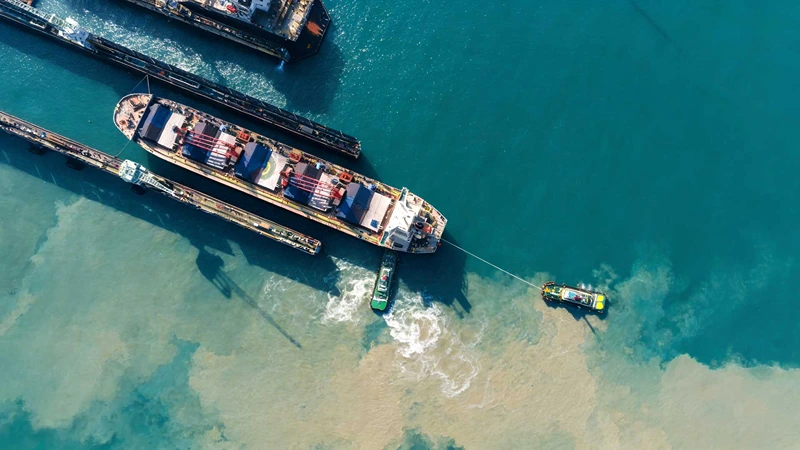
The Port of Houston required maintenance dredging to restore navigational depth along a 2.5-mile section of its shipping channel that had accumulated heavy sediment deposits over time. Reduced channel depth was limiting the safe passage of large cargo vessels and increasing the risk of grounding during peak traffic periods. Contractors needed a fluid transfer system capable of moving highly abrasive slurry containing sand, silt, and debris at high volumes without frequent shutdowns for hose failure or clogging. The operation also required continuous pumping over long distances to an onshore containment site.
The Solution
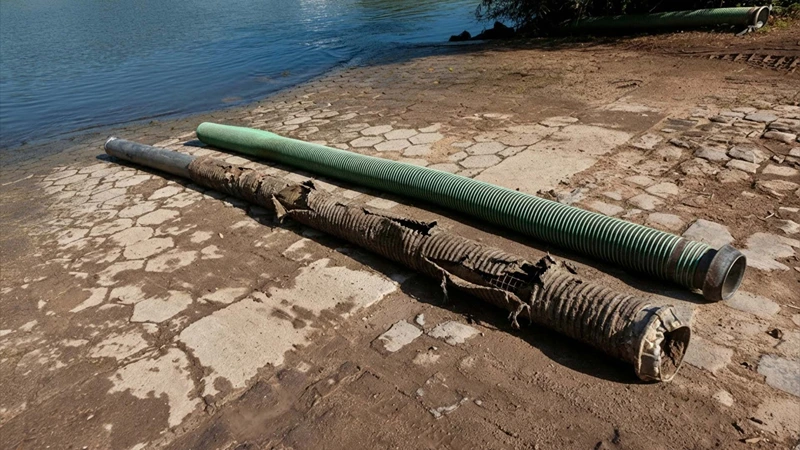
The dredging contractor deployed a heavy-duty slurry transport system supplied by Anaconda Pipe and Hose. Industrial slurry hose was connected to the dredging pump and integrated with floating pipeline sections to move sediment from the dredging site to a designated containment facility onshore. The system was configured to handle slurry concentrations approaching 30 percent solids while maintaining steady flow through the pipeline network. The abrasion-resistant hose construction enabled the system to operate continuously under demanding conditions while maintaining reliable throughput throughout the dredging campaign.
The Result
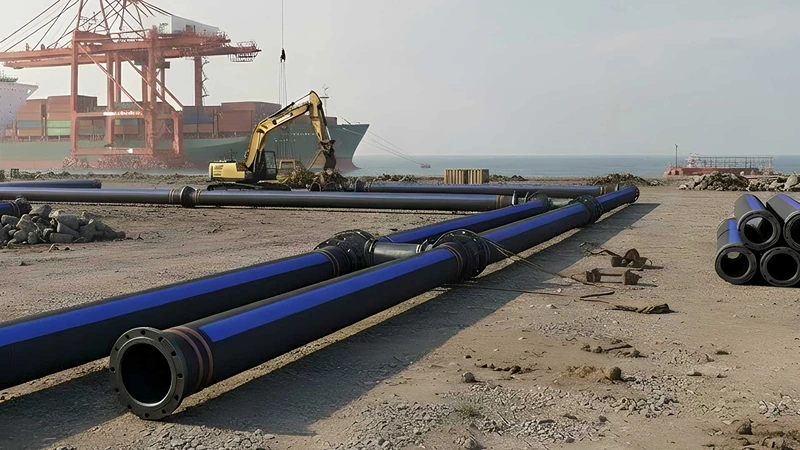
Using the slurry transport system from Anaconda Pipe and Hose, the dredging operation achieved pumping rates averaging approximately 1,200 cubic yards of slurry per hour. Over the 45-day maintenance project, the system successfully transported more than 1.3 million cubic yards of sediment from the shipping channel. Reliable hose performance minimized operational downtime and enabled the dredging crew to maintain a continuous pumping schedule, helping the port restore navigational depth faster and improving vessel access to critical cargo terminals.
Frequently Asked Questions
What information do I need to provide to get the right pipe or hose recommendation for my marine project?
To recommend the correct system, key inputs include flow rate, total transfer distance, pump type, and required discharge head. You should also specify slurry characteristics such as solids percentage, particle size, and abrasiveness. Installation details like permanent vs temporary setup, routing constraints, and whether the system is floating, submerged, or dockside are equally important. Providing these parameters ensures accurate sizing, proper material selection, and reliable long-term performance.
Can Anaconda supply custom fittings, couplings, or hose assemblies for shipbuilding and marine applications?
Yes. Custom configurations are often required in marine environments where standard connections do not align with vessel layouts or dredging systems. Anaconda can supply engineered fittings, flanged connections, camlock systems, or fully assembled hose sections designed to match pump discharge sizes, pipeline configurations, and operational requirements. This helps reduce installation time, eliminate compatibility issues, and ensure leak-free performance under demanding conditions.
How do I choose between HDPE pipe, lay flat hose, and slurry hose based on transfer distance, solids content, and installation type?
Selection depends on how the system will operate under load. HDPE pipe is typically preferred for long-distance, high-volume transfer where structural stability and low friction loss are critical. Slurry hose is better suited for abrasive, high-solids applications, especially in dynamic setups like dredging or barge operations. Lay flat hose works best for short-distance, temporary water transfer where portability and rapid deployment are required. In many marine systems, a combination is used to balance efficiency, durability, and flexibility.
Can these pipe and hose systems handle saltwater and harsh marine environments?
Yes. HDPE pipe offers strong resistance to corrosion and chemical exposure in saltwater conditions. Slurry hose is designed with reinforced layers to handle abrasion and continuous pumping, while lay flat hose materials are engineered to resist UV exposure and environmental wear in dockside and offshore conditions.
What sizes are available for marine and shipyard applications?
HDPE pipe systems are typically available in larger diameters ranging from about 6 inches to 36 inches or more, depending on project requirements. Slurry hose and lay flat hose are generally available in smaller to mid-range diameters such as 2 inches to 10 inches, with variations depending on the specific product configuration and application.
Can these pipe and hose systems be used for dredging operations in ports and shipyards?
Yes. HDPE pipe and slurry hose are widely used in dredging applications to transport sediment, sand, and slurry. These systems integrate with dredge pumps and floating pipelines to maintain consistent material flow, even under abrasive and high-solids conditions.
Are rental options available for short-term marine projects?
Yes. Rental systems are commonly used for temporary dredging, dewatering, or maintenance operations. They allow contractors to scale capacity quickly without committing to permanent infrastructure, especially for short-duration or emergency projects.
What kind of maintenance is required for marine pipe and hose systems?
Routine inspection is critical. Operators should monitor for abrasion, wall thinning, and connection integrity, especially in slurry applications. Proper handling, correct operating conditions, and periodic inspection help extend service life and prevent unexpected failures.
Contact Anaconda Pipe & Hose
Speak with our experts to define the right solution for your project. Our team supports you from initial planning through execution.