
- Quick Answer
- Why This Comparison Matters
- The Real Problem: Day-One Price Hides Lifetime Cost
- What Total Cost of Ownership Actually Includes
- How to Compare HDPE and Steel for Your Own System
- HDPE vs Steel Pipe: Side-by-Side Cost Comparison
- Where HDPE Fits, and Where Steel Still Wins
- How Anaconda HDPE Lowers the Ownership Cost
- Frequently Asked Questions
Quick Answer
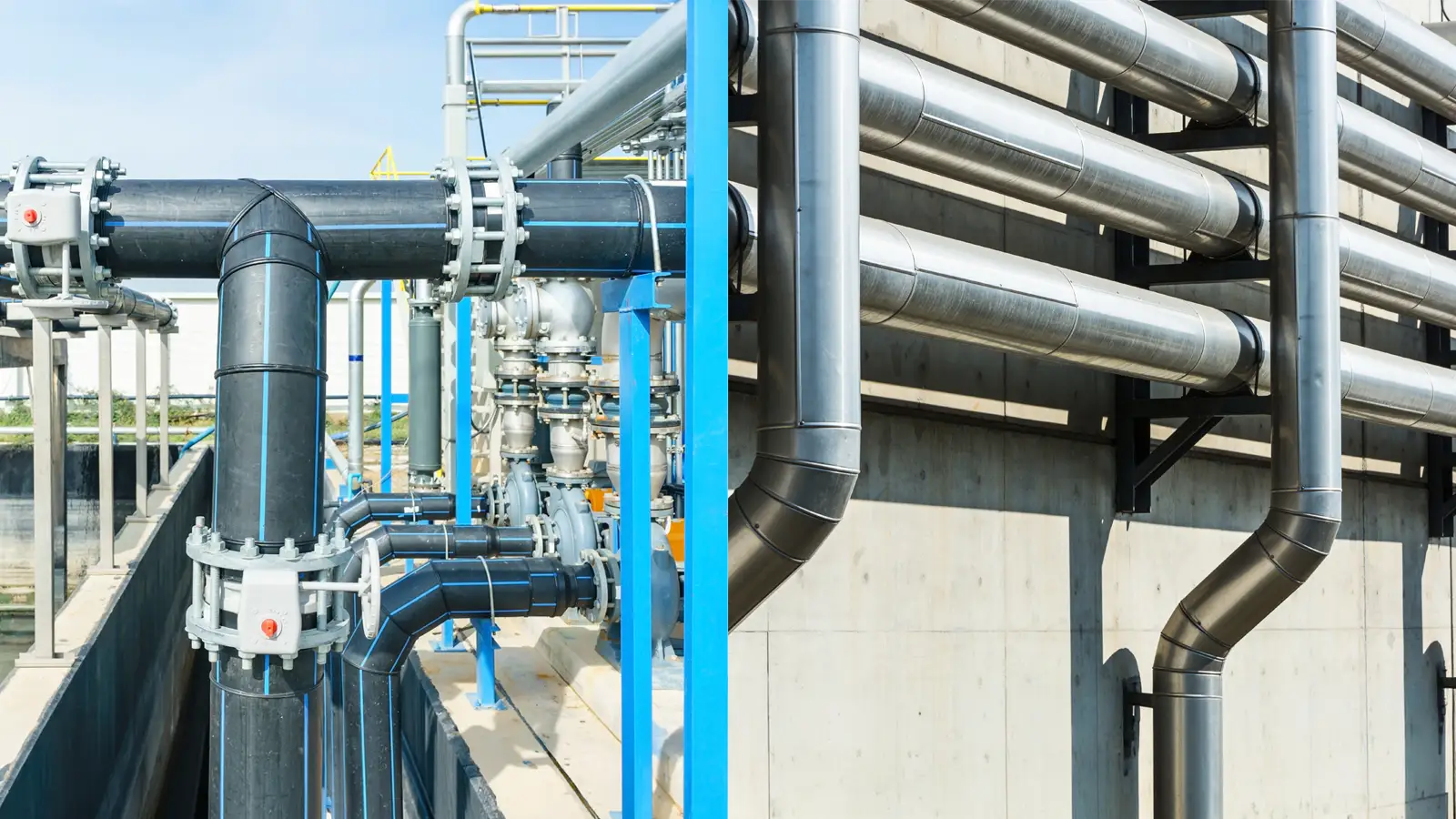
For most industrial water and slurry transfer applications, HDPE pipe delivers a lower total cost of ownership than steel even though steel often carries a lower price per foot at purchase. Purchase price is only one part of the equation. Corrosion mitigation, installation labor, joint failures, downtime, energy lost to internal friction, and eventual replacement all accumulate over a pipeline’s service life. Steel resists high pressure and high temperature well and remains the right choice in certain conditions. But in abrasive, corrosive, or frequently reconfigured systems, HDPE tends to cost less to own and operate over time.
Why This Comparison Matters
The question buyers ask is usually “which pipe is cheaper?” The more useful question is “which pipe costs less to own?” Those are not the same. This article breaks down where each material wins, how to compare them honestly, and which factors decide the real number, so a decision made on the purchase order does not turn into an unplanned cost two years into service.
The Real Problem: Day-One Price Hides Lifetime Cost
Buyers rarely fail because they picked the wrong pipe on day one. They fail because the day-one price hid the cost that showed up later.
A steel pipeline moving abrasive slurry looks economical on the purchase order. Then the internal wall begins to corrode and roughen. Flow drops, so pumps work harder and burn more energy to hold the same throughput. Bolted and flanged joints loosen under vibration and start to weep. Crews shut the line down to repair connections, and every shutdown is lost production. When dredging or bypass zones move, reconfiguring a welded or flanged steel system can take hours per change.
These are not edge cases. In one Anaconda coastal dredging project, a steel pipeline with bolted connections corroded and leaked under abrasive slurry, forcing repeated shutdowns and a loss of nearly 30% of operational uptime. The pipe was not defective. It was simply the wrong material for a corrosive, abrasive, frequently rerouted duty. Total cost of ownership is the tool that surfaces this kind of mismatch before the purchase order is signed, not after.
What Total Cost of Ownership Actually Includes
Total cost of ownership, or TCO, is the sum of every cost a pipeline generates from purchase to disposal. For an industrial fluid system it breaks into five buckets: acquisition, installation, operation, maintenance, and end of life. Comparing HDPE and steel on price per foot alone ignores four of the five.
Acquisition and Installation
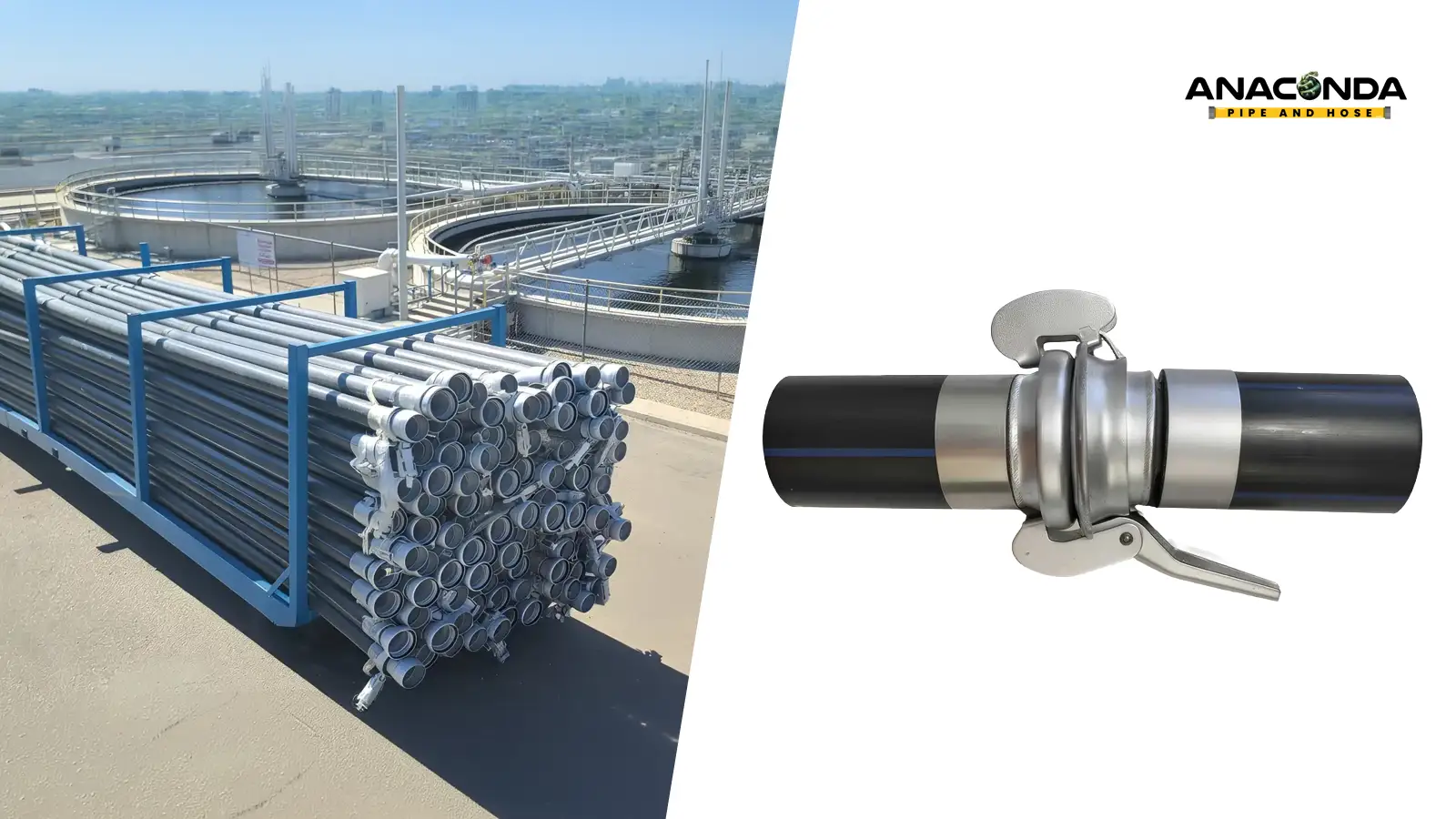
Steel usually has a lower raw material cost per foot in larger diameters, but it is heavy. Heavier pipe means more crane and rigging time, more labor, and slower placement. Joints are welded or flanged, which is skilled, time-consuming work. HDPE pipe weighs a fraction of steel of the same diameter, so it is faster to move and stage, and it can be joined by heat fusion for a leak-free monolithic line or by mechanical couplings such as Bauer fittings for systems that need to come apart. Faster installation directly lowers labor cost, which is often the largest single line item on a temporary or mobile project.
Operation and Internal Friction
A pipe’s internal surface controls how much energy the pump must supply. Steel corrodes and tuberculates over time, roughening the bore and raising friction, so a line that met its flow target when new can fall short years later. HDPE has a smooth internal bore that resists scaling and does not corrode, so its flow characteristics stay closer to as-installed values across its life. Lower sustained friction means lower pumping energy, and energy is a recurring cost that runs for the life of the system.
Maintenance and Downtime
This is where the two materials diverge most. Steel is prone to internal and external corrosion, which drives coating, cathodic protection, inspection, and eventual section replacement. Bolted joints are common leak points. HDPE does not rust, resists most chemicals, and, in modular systems, lets crews isolate and swap a damaged section in minutes rather than hours. Reduced downtime is often the single biggest TCO advantage HDPE offers in demanding service.
End of Life and Service Life
HDPE water pipe is frequently cited in industry literature with a service life in the range of 50 to 100 years under suitable conditions. Actual life for any pipe depends on pressure, temperature, chemistry, abrasion, and duty cycle, so this should be treated as a planning reference rather than a guarantee.
DR11 vs DR17: Matching Wall Thickness to the Job
HDPE pressure capacity is set by its dimension ratio, or DR, the ratio of outside diameter to wall thickness. A lower DR means a thicker wall and a higher pressure rating. Anaconda supplies two grades. DR11 has a thicker wall and suits higher pressure and more abrasive conditions. DR17 has a thinner wall and a larger internal diameter, which favors higher flow at lower pressure. Choosing the correct DR is part of getting the TCO right, because oversizing the wall adds material cost while undersizing it shortens life.
How to Compare HDPE and Steel for Your Own System
Before selecting a material, work through the variables that actually move the cost:
- Operating pressure and temperature. Steel handles very high pressure and high temperature better than HDPE. Hot or high-pressure duty may require steel or a low-DR HDPE selection, confirmed by engineering.
- Fluid chemistry and corrosivity. Corrosive or chemically aggressive fluids penalize steel heavily through corrosion cost. HDPE’s corrosion immunity is a direct saving here.
- Abrasion and solids. Abrasive slurry wears both materials, but HDPE’s smooth, tough bore handles sand, silt, and tailings well without the corrosion penalty that roughens steel.
- Installation environment and layout changes. Systems that move, expand, or reroute favor HDPE with mechanical couplings. Fixed, permanent, high-load runs may favor steel or fused HDPE.
- Project duration and ownership model. Short-term and phased projects often favor rental HDPE, which removes capital cost and storage entirely.
- Total dynamic head and flow targets. Friction losses over the pipeline life feed directly into pumping energy cost, where HDPE’s stable bore helps.
HDPE vs Steel Pipe: Side-by-Side Cost Comparison
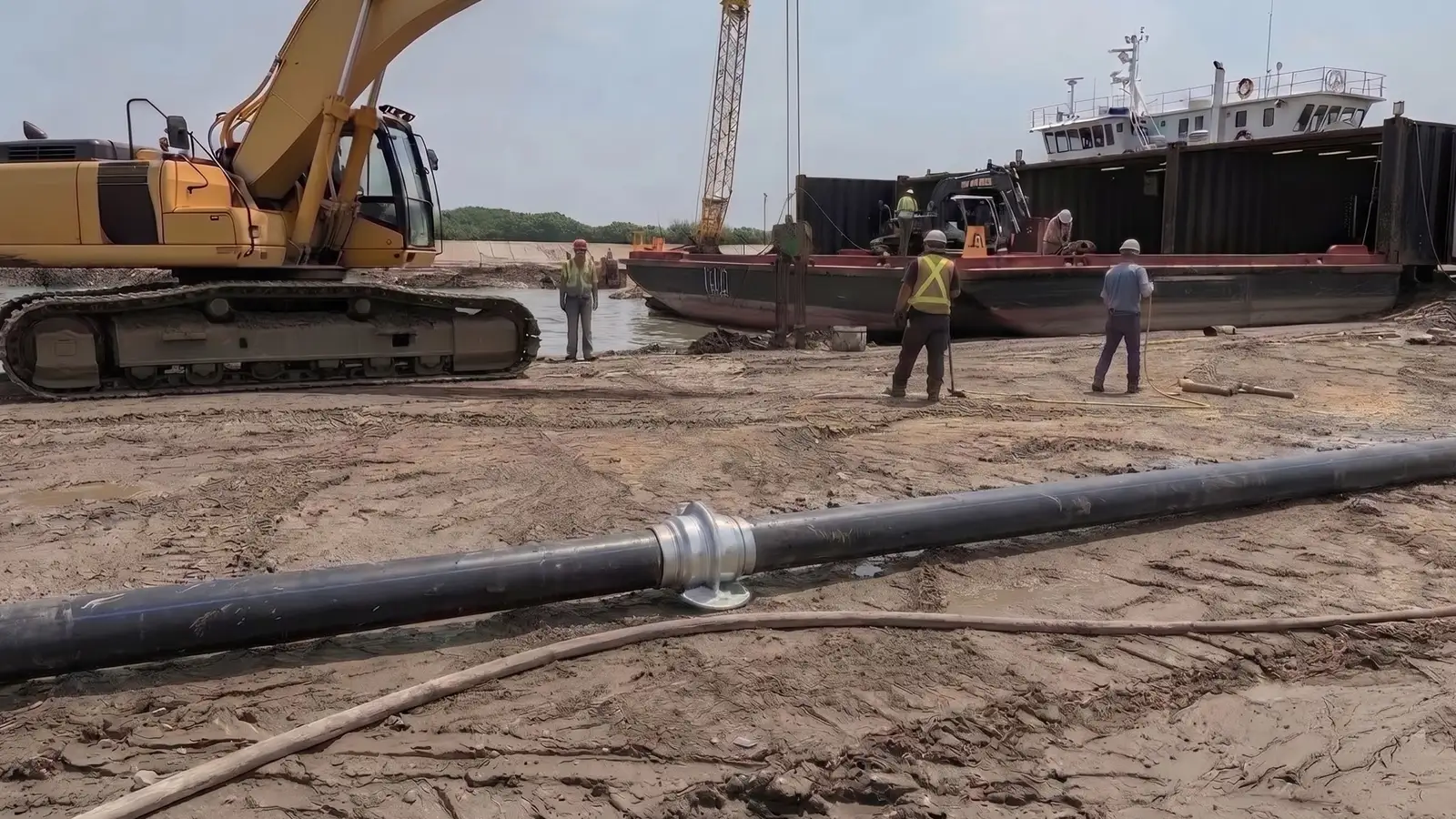
The table below is a general industrial comparison. The right material for any specific line depends on its pressure, chemistry, abrasion, layout, and duration.
Cost Factor |
HDPE Pipe |
Steel Pipe |
|---|---|---|
Material cost per foot |
Higher in some sizes; competitive in mid diameters |
Often lower per foot, especially large diameters |
Weight & handling |
Light; faster to move, stage, and place |
Heavy; more crane, rigging, and labor |
Joining method |
Heat fusion or Bauer/mechanical couplings; tool-free options |
Welded or flanged; skilled, slower labor |
Corrosion resistance |
Does not rust; resists most chemicals |
Corrodes internally and externally; needs coatings/CP |
Internal friction over time |
Smooth bore stays smooth; stable flow |
Roughens as it corrodes; friction and energy rise |
Abrasion handling |
Tough, wear-resistant, no corrosion penalty |
Wears and corrodes together in slurry service |
Maintenance & downtime |
Low; sections swapped in minutes in modular systems |
Higher; joint leaks and section replacement |
Reconfigurability |
Fast with quick-connect couplings |
Slow; re-welding or re-flanging required |
Typical service life |
Often cited 50-100 yrs [verify] |
Varies widely with corrosion exposure |
Best-fit conditions |
Corrosive, abrasive, mobile, phased duties |
Very high pressure/temperature, heavy load, fixed runs |
Where HDPE Fits, and Where Steel Still Wins
HDPE is a strong fit for dredging discharge lines, mining and tailings transport, dewatering and bypass pumping, wastewater and sludge transfer, and chemical transfer where the fluid is compatible. These are corrosive, abrasive, or frequently reconfigured duties where steel’s corrosion and rigidity work against it. Anaconda’s HDPE systems are used across dredging and mining precisely because those conditions punish steel.
Steel still wins in specific cases: very high pressure and high temperature service, applications with heavy point loading or mechanical impact, fire-code situations requiring metallic pipe, and some fixed plant runs where existing steel infrastructure and thermal limits dominate the decision. An honest comparison names these cases rather than claiming one material for every project. The right answer is the material whose total cost is lowest for the specific pressure, chemistry, abrasion, layout, and duration in front of you.
How Anaconda HDPE Lowers the Ownership Cost
Anaconda Pipe and Hose builds its HDPE systems around the cost drivers that matter over a pipeline’s life. HDPE pipe is offered in DR11 and DR17 grades so the wall thickness can be matched to pressure and flow rather than over-specified. Bauer quick-connect fittings come standard, letting crews connect and disconnect without fusion welding or specialized tools, which cuts installation labor and makes reconfiguration fast on projects that change layout. The pipe is also compatible with ANSI flanges and threaded connections, so it integrates with existing infrastructure. For projects that do not justify capital purchase, a rental model removes the upfront cost and the long-term storage and maintenance burden.
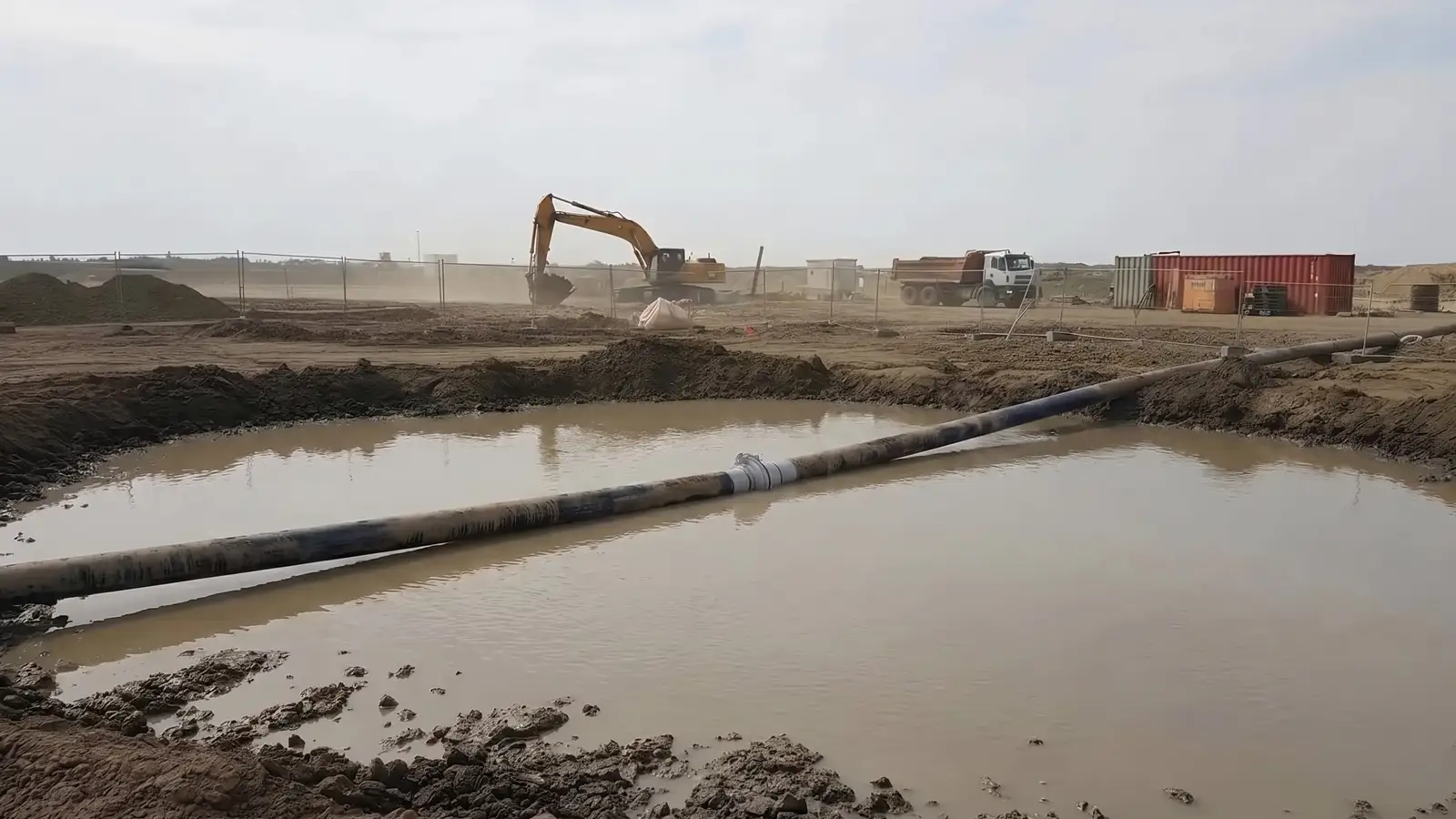
In one coastal dredging project, replacing a corroding steel line with Anaconda DR11 HDPE and Bauer fittings cut installation time by roughly 45% and reduced maintenance downtime by more than 60%, with the project finishing ahead of schedule. Those figures are specific to that project and should be treated as an illustration rather than a promise, but they show how the material and connection choices translate into lower total cost.
Frequently Asked Questions
Is HDPE pipe cheaper than steel pipe?
Not always at purchase. Steel can be cheaper per foot, especially in larger diameters. HDPE usually wins on total cost of ownership because it avoids corrosion mitigation, installs faster, leaks less at joints, and keeps a smoother bore that lowers pumping energy over time.
Does steel pipe corrosion really cost that much?
Over a long service life, yes. Corrosion drives coatings, cathodic protection, inspection, internal roughening that raises pumping energy, and eventual section replacement. In abrasive or corrosive service it is often the largest hidden cost in a steel pipeline.
How long does HDPE pipe last compared to steel?
HDPE is commonly cited with a service life of 50 to 100 years under suitable conditions, and it does not corrode. Steel life varies widely with corrosion exposure and maintenance. Actual life for either material depends on pressure, temperature, chemistry, and abrasion.
What is the difference between DR11 and DR17 HDPE pipe?
DR11 has a thicker wall for higher pressure and more abrasive conditions. DR17 has a thinner wall and a larger internal diameter for higher flow at lower pressure. The correct choice depends on your system pressure, fluid, and pipeline length.
When is steel still the better choice?
Steel is often better for very high pressure or high temperature service, heavy mechanical or point loading, fire-code requirements for metallic pipe, and some fixed plant installations. These cases should be confirmed by engineering.
Can HDPE handle abrasive slurry?
Yes. HDPE resists wear and does not corrode, so it performs well in slurry carrying sand, silt, and tailings. Performance still depends on flow velocity, solids concentration, and particle size, which should be reviewed during selection.
Does renting pipe change the cost comparison?
It can. Rental removes the capital cost, storage, and long-term maintenance from the equation, which often makes HDPE the lower-cost option for short-term, phased, or emergency projects.
0 Comments