- Quick Answer
- Why Mining Rental Applications Emphasize Wear Life Planning
- Matching Hose Construction to Actual Slurry Density
- Planning for Variable Solids Concentration
- Coordination With Facility Engineering and Safety Requirements
- Inspection Intervals for Continuous-Duty Mining Applications
- Planning Rental Terms for Extended Continuous-Duty Deployments
- Redundancy Planning for Critical Slurry Transport Lines
- What to Send Anaconda for a Project Review
- Frequently Asked Questions
- Related Anaconda Resources
- Request the Right Pipe, Hose, and Fittings
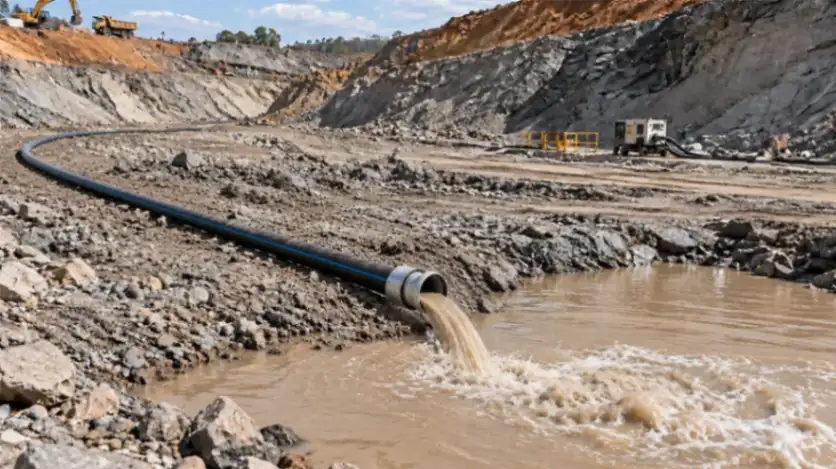
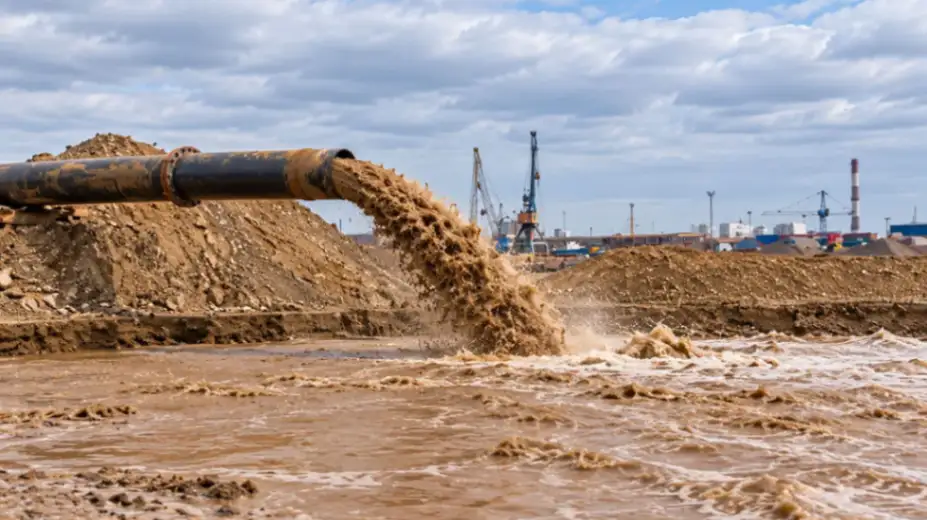
Mining slurry hose selection begins with the actual mixture and operating envelope—not industry labels. Tailings, concentrate, process slurry, sludge, and mine water can differ in density, particle size and shape, concentration, chemistry, temperature, settling behavior, and abrasiveness. The line must also fit the facility’s pressure, containment, inspection, emergency, and environmental controls.
Quick Answer
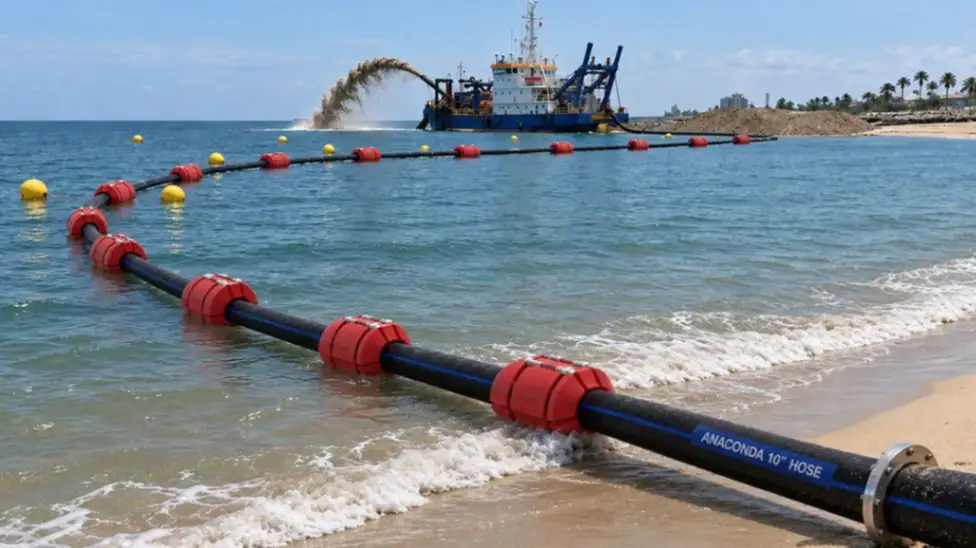
Anaconda’s current industrial slurry/discharge family is listed in 4-, 6-, 8-, 10-, and 12-inch IDs, standard 33-foot lengths, and ANSI 150 fixed or swivel flanges, with size-specific weights and bend-radius ranges. Confirm the current datasheet and rental stock. The 150 PSI family listing is not permission to operate every assembled mining system at that pressure; the lowest-rated component and all transient cases govern.
Anaconda Pipe and Hose manufactures, distributes, sells, and rents industrial conveyance equipment. Product selection must be based on the complete system, current datasheets, actual inventory, and the responsible project engineering—not on nominal diameter or a product label alone.
Why Mining Rental Applications Emphasize Wear Life Planning
Mining service can expose hose to continuous abrasive flow, tight bends, vibration, dragging, UV, chemical splash, retained solids, and high operating hours. Rental does not shift operational responsibility away from the user. Define inspection, wear limits, approved media, service conditions, cleaning, damage responsibility, spares, and replacement logistics in the project plan and rental agreement.
Matching Hose Construction to Actual Slurry Density
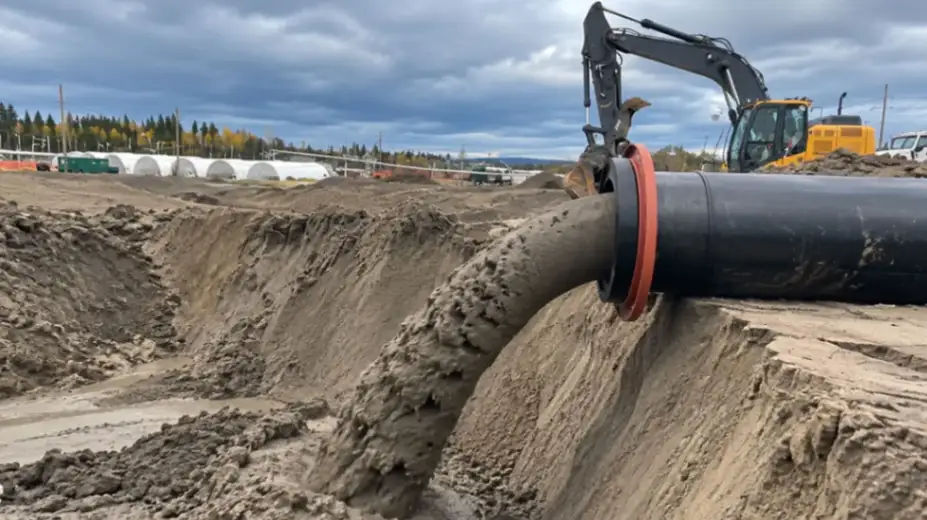
Density alone is not enough. Match hose construction to particle size and shape, hardness, concentration, velocity, pressure/vacuum, temperature, chemistry, bend radius, pulsation, and movement. Use Anaconda’s exact tube, reinforcement, cover, flange, length, weight, bend-radius, and service data. Confirm whether the selected assembly is discharge-only or approved for suction/vacuum.
Planning for Variable Solids Concentration
Review every credible operating, startup, shutdown, retained, settled, flushing, dilution, blockage, and upset case required by facility engineering. Low concentration may increase velocity; high concentration may increase density, friction, settling risk, pressure, and wear. Do not size from the average solids percentage alone.
Coordination With Facility Engineering and Safety Requirements
Facility engineering should approve pressure class, flange standard, gasket and chemistry, hose routing, supports/restraints, bend radius, guarding, crossings, access, lockout/isolation, spill containment, inspections, alarms, emergency shutdown, and change management. Anaconda supplies conveyance equipment; the mine owns the process and site controls.
Inspection Intervals for Continuous-Duty Mining Applications
Set intervals from risk, duty, manufacturer instructions, regulatory requirements, and observed wear—not a generic calendar. Inspect tube condition where accessible, cover abrasion, bulging, soft spots, exposed reinforcement, flange movement, leaks, gasket condition, bolts, supports, bend geometry, pressure changes, vibration, and route damage. Remove questionable sections from service under the approved procedure.
Planning Rental Terms for Extended Continuous-Duty Deployments
Mining slurry transport rentals frequently run for extended periods compared to shorter dredging or construction rentals, which affects how rental terms should be structured—extended-duration agreements benefit from clearly defined wear-life expectations and scheduled condition assessments at intervals throughout the rental period, rather than only at final return, giving both the facility and the rental supplier visibility into wear progression and an opportunity to plan replacement timing before an unexpected failure interrupts continuous production.
Redundancy Planning for Critical Slurry Transport Lines
Slurry transport lines supporting continuous mining production are frequently critical to overall facility throughput, meaning a hose failure creates real production downtime beyond the direct cost of the failed section. Facilities running critical continuous-duty slurry lines should consider redundancy planning—spare sections readily available on site, or a documented rapid-replacement procedure—as part of the overall rental relationship, rather than treating each hose section as a single point of failure with no contingency plan if wear progresses faster than expected.
What to Send Anaconda for a Project Review
- Mine service and responsible engineer; slurry source/destination; production schedule; operating hours; criticality; codes, standards, and facility procedures
- Flow, pressure/vacuum, pump curve, route, elevation, pipe/hose IDs, fittings, valves, branches, boosters, discharge condition, startup/shutdown, surge, blockage, and flush plan
- Solids concentration, mixture and solids specific gravity, particle distribution/shape/hardness, maximum particle, chemistry, pH, temperature, viscosity, abrasiveness, and settling behavior
- Hose size, construction, length, bend radius, weight, fixed/swivel ANSI flange, suction/discharge duty, movement, external abrasion, supports, restraints, and handling
- Rental term, utilization, inspection and wear limits, rotation/replacement procedure, spares/redundancy, cleaning/decontamination, delivery/return location, and schedule
Frequently Asked Questions
Is hose size selected from flow alone?
No. Include velocity, slurry regime, friction, pressure/vacuum, bend radius, particle size, abrasion, fittings, pump curve, and facility limits.
Can every Anaconda slurry hose operate at 150 PSI?
Current standard family pages list 150 PSI, but the exact hose, temperature, flange, gasket, adapter, valve, and complete system must be verified. Transients may govern.
How often should mining slurry hose be inspected?
Use the facility-approved risk and duty-based interval, with additional inspections after startup, pressure events, route movement, impact, leaks, or visible wear.
Should a critical line have spare hose?
Usually the risk review should consider spare sections, gaskets, bolts, adapters, and a safe isolation/replacement plan. Required redundancy is set by the facility.
Can rental hose be used for unknown slurry chemistry?
No. Provide chemical, pH, temperature, and compatibility information before selection.
Related Anaconda Resources
- mining pipe and hose solutions
- industrial slurry hose
- HDPE pipe
- pipe and hose rentals
- specifications and brochures
Request the Right Pipe, Hose, and Fittings
Send Anaconda the media, required flow, pump and pressure data, route/elevation, product and fitting requirements, operating cases, rental or purchase preference, quantity, site access, delivery location, and schedule. The team can review current inventory and configure the pipe, hose, connections, adapters, spares, freight, and quote for the project.
Request a Quote or call (619) 201-8311.
0 Comments