- Quick Answer
- Why Rental Specifically Fits Dredging's Project Profile
- Configuring the Discharge Line: Pipe, Hose, or Both
- Coordinating Rental Sizing With Pump and Float Planning
- Mobilization Planning for Rental Discharge Lines
- Managing Wear Across a Dredging Project's Duration
- Planning for Discharge Point Relocation
- Weather and Seasonal Considerations for Dredging Discharge Lines
- What to Send Anaconda for a Project Review
- Frequently Asked Questions
- Related Anaconda Resources
- Request the Right Pipe, Hose, and Fittings
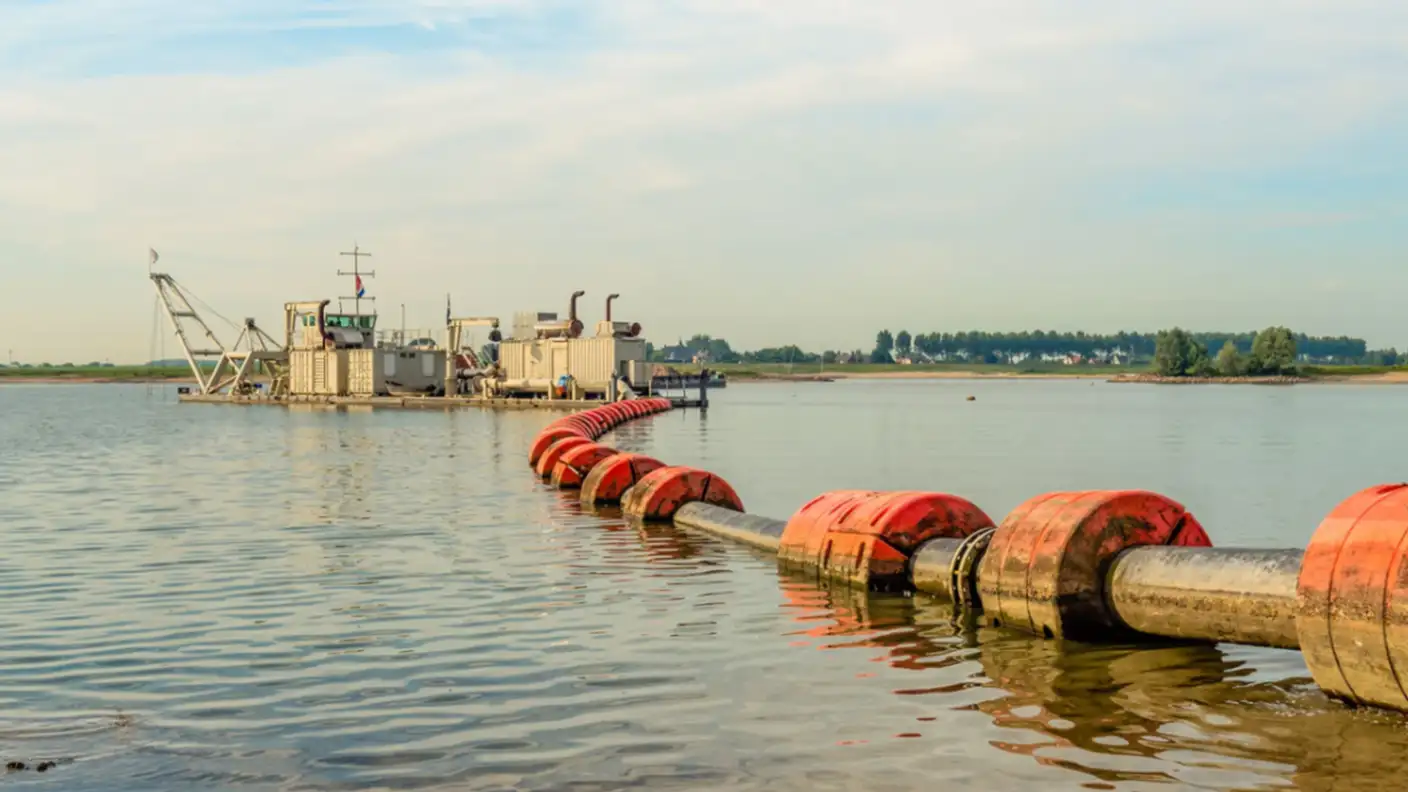
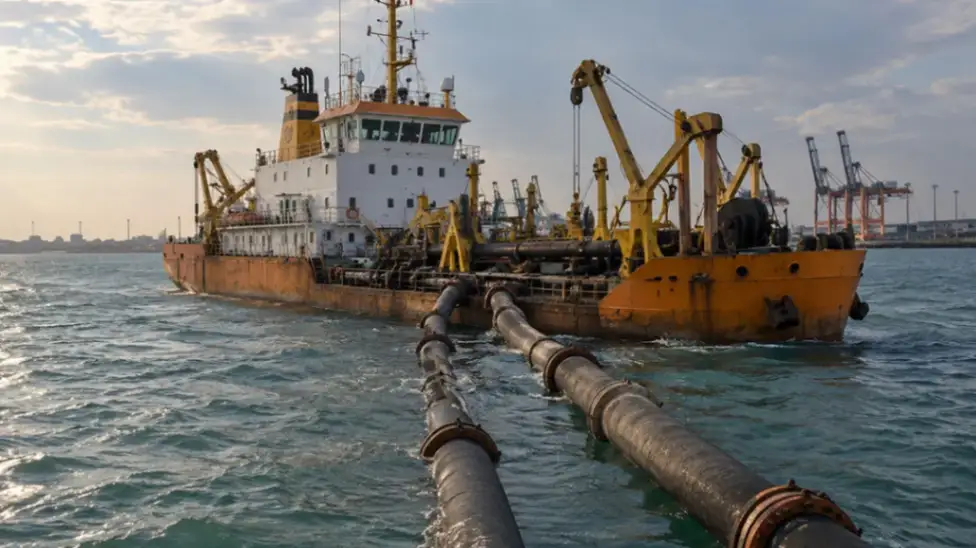
A dredging discharge line is a system: pump, suction/intake arrangement, flexible slurry hose, HDPE pipe, fittings, valves, flotation or supports, anchors/restraints, boosters, discharge controls, and receiving area. Anaconda supplies the conveyance components; pump performance must be confirmed from the selected pump curve and the complete hydraulic calculation.
Quick Answer
Use industrial slurry/discharge hose near moving dredges, pumps, bends, and transitions; Bauer-equipped HDPE for stable long runs; and separate auxiliary hose only when its media and rating fit the service. Size every section for material, velocity, TDH, pressure/vacuum, surge, bend radius, abrasion, movement, supports, and the project’s operating and shutdown cases.
Anaconda Pipe and Hose manufactures, distributes, sells, and rents industrial conveyance equipment. Product selection must be based on the complete system, current datasheets, actual inventory, and the responsible project engineering—not on nominal diameter or a product label alone.
Why Rental Specifically Fits Dredging’s Project Profile
Rental can fit temporary, phased, emergency, or location-specific dredging because pipeline length, diameter, pressure, route, and flexible-section needs change by project. It is not automatically the lowest-cost option. Compare availability, freight, mobilization, wear, cleaning, extensions, downtime risk, and future utilization with purchasing.
Configuring the Discharge Line: Pipe, Hose, or Both
Most dredging lines use both. Industrial slurry/discharge hose accommodates movement near the pump, dredge, excavator, booster, bend, or shore transition. HDPE provides a stable long run. Anaconda’s current slurry family is the dredge-hose pathway; do not specify a separate generic “dredge hose” without pressure/vacuum, flange, bend, wear, and flotation requirements.
Coordinating Rental Sizing With Pump and Float Planning
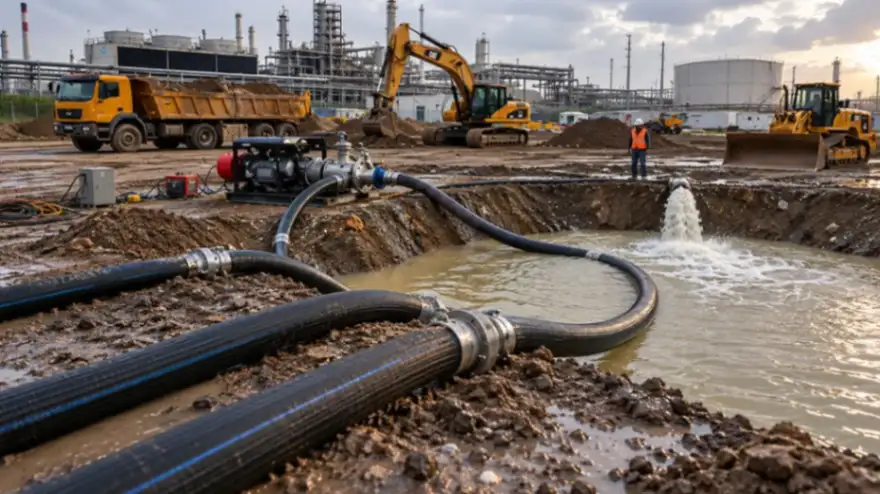
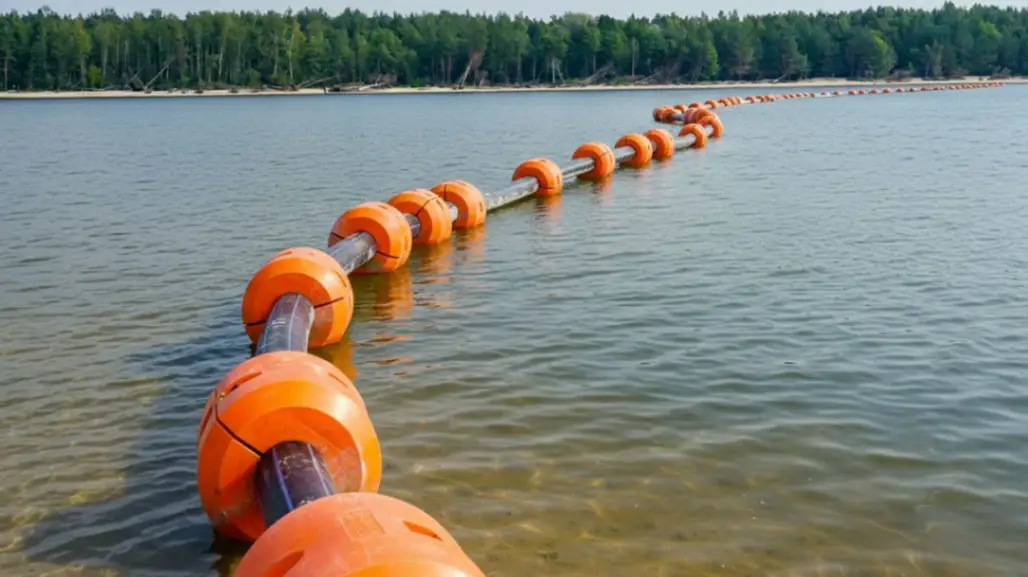
Size pump and pipeline together from the operating material, production target, velocity, TDH, pressure profile, and pump curve. Specify flotation separately from net submerged load, line contents, fittings, freeboard, spacing, movement, and environment. Pipe and hose do not determine float quantity by diameter alone, and floats do not correct a mismatched pump or hydraulic design.
Mobilization Planning for Rental Discharge Lines
Confirm access, truck and crane/forklift requirements, lift points, pipe/hose weights, staging areas, section sequence, Bauer male/female orientation, flange hardware, adapters, gaskets, support/flotation, pressure-test plan, environmental controls, and the route before delivery. A missing reducer or reversed end can idle more production than the pipe rental saved.
Managing Wear Across a Dredging Project’s Duration
Track wear by actual duty: particle characteristics, velocity, concentration, pressure, bends, hose movement, internal abrasion, external dragging, UV, and operating hours. Inspect high-wear bends, pump connections, hose ends, flanges, Bauer ends, gaskets, supports, and transitions at the project-defined interval. Rotate or replace only when the product and engineering procedure allow it.
Planning for Discharge Point Relocation
Many dredging projects relocate the discharge point periodically as the disposal or placement area fills or as the dredge advances along a cut—planning the discharge line configuration with this relocation in mind from the start, rather than treating each relocation as an unplanned event, means having appropriate extra sections or flexible connections available when the relocation actually happens. Projects that discover mid-relocation they need additional sections not currently on site face real production downtime waiting for additional rental product to be delivered.
Weather and Seasonal Considerations for Dredging Discharge Lines
Dredging projects running through variable seasonal conditions should account for how those conditions affect discharge line performance and integrity—freezing conditions affecting hose flexibility and connection sealing in colder climates, or storm and high-water events affecting exposed sections crossing open water. Planning discharge line configuration and monitoring frequency against the specific seasonal conditions a project will actually encounter, rather than a generic year-round assumption, is worth doing for projects spanning multiple seasons.
What to Send Anaconda for a Project Review
- Dredge/pump make and model, pump curve, speed/power, production target, flow, TDH, discharge pressure, and duty cycle
- Slurry type, particle distribution, maximum particle, solids concentration, density, abrasiveness, temperature, debris, and shutdown/retained-material cases
- HDPE and hose diameters, DR, lengths, actual IDs, pressure/vacuum, bend radius, fittings, valves, transitions, branches, boosters, and discharge configuration
- Route and elevation, floating/shore/submerged sections, floats/supports, couplings, anchors/restraints, vessel or excavator movement, towing, current, waves, tide, and traffic
- Rental quantity, spares, wear/inspection plan, cleaning, site access, lifting/handling, mobilization, phased relocations, return date, delivery location, and schedule
Frequently Asked Questions
Is Anaconda dredge hose separate from its slurry hose family?
The current site positions industrial slurry/discharge hose for dredging applications. Specify the exact assembly instead of treating “dredge hose” as an automatically interchangeable product.
Should a dredging line use HDPE, hose, or both?
Usually both: hose where movement and bends require flexibility, HDPE for stable long runs, and engineered transitions between them.
Can the pipe diameter simply match the pump discharge?
Not automatically. Use flow, material, velocity, TDH, pressure profile, internal diameter, fittings, and pump curve.
Does Anaconda size the pump?
Anaconda can support pipeline configuration, but final pump performance must be confirmed from the pump manufacturer’s curve and the complete system calculation.
What causes most rental mobilization delays?
Unverified access, missing adapters/gaskets/hardware, wrong end orientation, underestimated component weight, unavailable inventory, and route changes are common preventable causes.
Related Anaconda Resources
Request the Right Pipe, Hose, and Fittings
Send Anaconda the media, required flow, pump and pressure data, route/elevation, product and fitting requirements, operating cases, rental or purchase preference, quantity, site access, delivery location, and schedule. The team can review current inventory and configure the pipe, hose, connections, adapters, spares, freight, and quote for the project.
Request a Quote or call (619) 201-8311.
0 Comments